
Music Theory Games for Kids: Free With Tunelark Lessons

There is a moment most music parents know. The weekly lesson goes beautifully, the teacher says practice the note reading, and by Wednesday the flashcards are still exactly where they landed on Sunday. Your child loves playing. What they do not love is drilling, and note names, rhythms, and ear training are pure drilling when all you have is a workbook and a parent saying “just ten minutes, please.”
This is the problem Tunelark’s music learning games were built to solve, and every child who takes lessons with a Tunelark teacher gets all of them free. More than 150 games covering note reading, music theory, and ear training, designed so that the drilling feels like beating levels instead of doing homework. For a parent comparing lesson options, the games change the math on a child’s musical education, because the between-lesson week is where most young musicians are made or lost.
Why the week between lessons decides everything
A weekly lesson is thirty or forty-five minutes. The other six days are where skills either take root or wash out, and research on young music students keeps landing on the same two findings. First, how children practice matters more than how long: active practice with immediate feedback builds skills that passive repetition does not. Second, and more important for parents, a long-term study that followed young learners found that the children who eventually quit their instrument reported losing the feeling of being competent well before they stopped. Children do not usually quit music because they stop liking music. They quit because they stop feeling capable of it.
That is the exact lever the games pull. A child who spends ten minutes beating “name the white notes, level 3” walks away from the screen having visibly gotten better at something, three times this week. Small, frequent, undeniable wins are how a sense of competence gets built, and a growing sense of competence is the best quit-proofing a young musician can have.
What playing actually looks like
Each game takes one narrow skill and turns it into rounds. A note appears on the staff and your child finds it on a piano keyboard on the screen. An interval plays and they pick which one they heard. They earn medals, keep hearts, fill a progress bar, and level up when they have mastered the current difficulty, which keeps the challenge exactly hard enough to stay interesting.
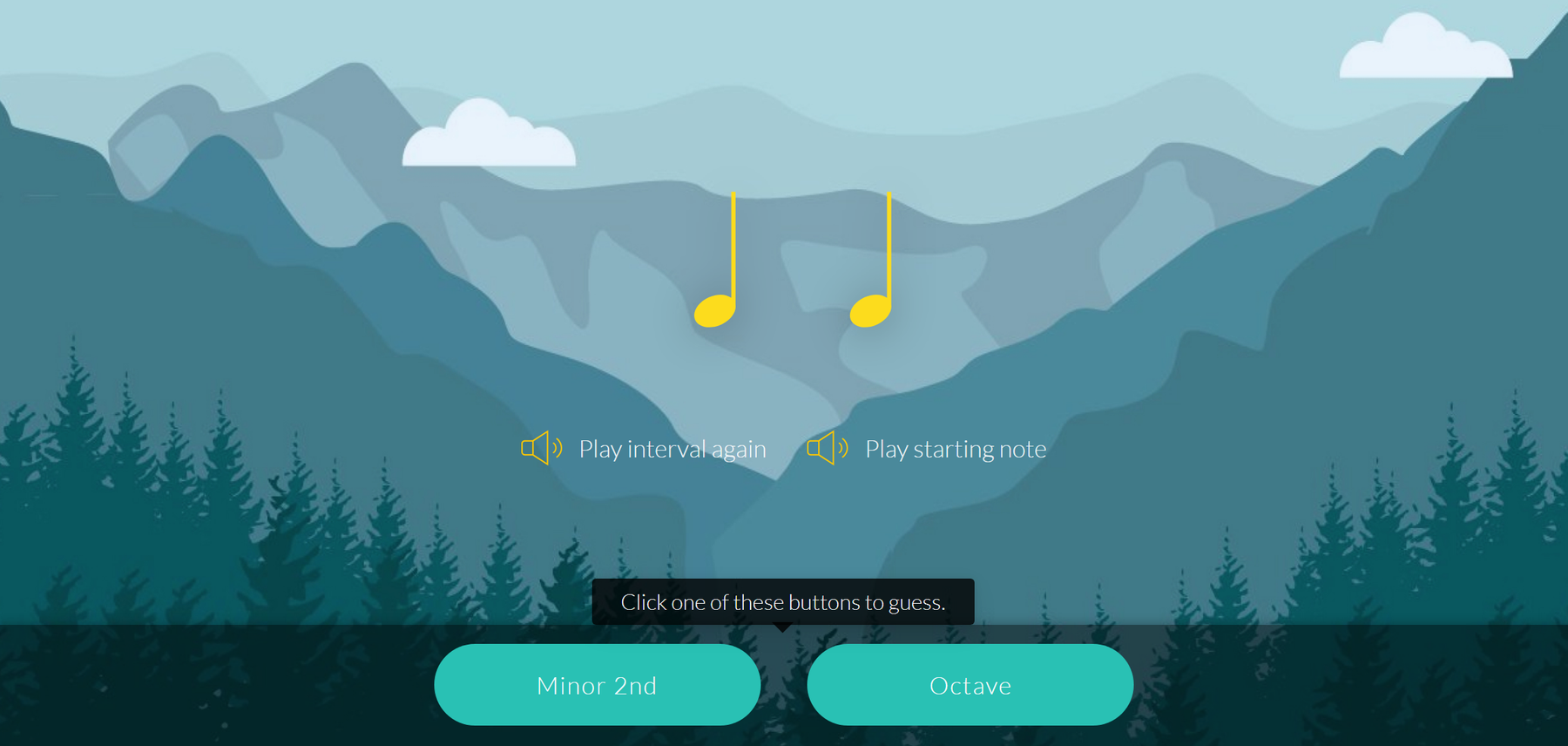
In an eight-week study of beginning piano students, children who learned fundamentals through this kind of game-based challenge dramatically outperformed a traditional-instruction group on pitch and rhythm knowledge. The mechanism is no mystery: games ask a child to answer from memory and correct them instantly, hundreds of times a session, which is the kind of practice that sticks. It also happens on whatever screen your family already has, a tablet, a laptop, or a phone, with a microphone option that lets them answer by playing their instrument.
A practical note from experience: the games generate zero practice battles, because they do not read as practice. The struggle over daily practice does not disappear entirely, since an instrument still needs hands-on time, but the theory-and-drilling half of the workload quietly moves to a screen your child asks to use.
The teacher stays in the driver’s seat
The games are not a separate app your child wanders through alone. Their Tunelark teacher shapes the whole experience: they choose which skills your child sees, assign specific games between lessons, and read a progress report that shows every session, every level, and every mastered skill before the next lesson starts.
That connection is what separates this from handing a child an educational game and hoping. When your child logs sessions on interval training all week, their teacher opens the lesson knowing it, says so, and builds on it. Children notice when their effort is seen. It also means the drilling is always the right drilling: the games your child plays this week are the fundamentals their teacher wants automatic next month, not random content. Their teacher supports them, the games make their effort visible, and your job gets to be encouragement rather than enforcement.
And if your child ever hits the wall every young musician hits, the progress ladder helps there too. A child who can see 29 mastered skills stacked behind them has hard evidence they are someone who gets better at things, which is exactly the self-story that carries a student through the moments they want to quit.
What this means when you are choosing lessons
Online lesson options look similar from the outside: a teacher, a video call, a weekly time slot. The differences live in what surrounds the lesson. At Tunelark, the surrounding includes a vetted teacher your family chooses yourselves, and the full game library included free for every student, adult or child, for as long as they take lessons. Nothing to buy, nothing to subscribe to, no premium tier.
If you want to see what your child would see, try a demo game together right now. Fair warning: the demo has converted a number of skeptical parents into players themselves. Theory is not just for kids, and more than a few of our adult students discover they enjoy finally learning it properly alongside their children.
How to Find a Music Teacher for Your Child on Tunelark
1. Browse teachers at tunelark.com/find-a-teacher and filter by your child’s instrument.
2. Read bios and watch intro videos together. Children have strong opinions about teachers, and letting them help choose builds buy-in from day one.
3. Book a trial lesson with the teacher your child is excited about.
4. Afterward, watch how your child talks about it. Lit up and full of stories is what you are looking for.
Frequently Asked Questions
Are the music learning games included with Tunelark lessons?
Yes. Every Tunelark student gets the full library of 150+ games free for as long as they take lessons, and their teacher gets the tools to assign games and track progress. There is no separate subscription and no in-app purchase.
What ages are the games right for?
The games start at naming the notes on a keyboard and climb through advanced ear training, so they grow with your child from early elementary through their teens. Their teacher controls which skills are visible, so a young beginner only ever sees material at their level.
How much screen time do the games involve?
Less than you might fear. The games are designed for short sessions, roughly ten to fifteen minutes, and the research on spaced practice says two or three short sessions a week beat one long one anyway. Progress saves automatically, so stopping mid-skill costs nothing.
Do the games replace practicing the instrument?
No. They replace the flashcard-and-workbook portion of practice, the note naming, theory, and ear training that children resist most. Hands-on instrument time still matters, but it gets easier too, because a child who reads notes fluently spends practice time making music instead of decoding it.
My child plays violin, not piano. Will piano-based games still help?
Yes. The games teach theory, note reading, and ear skills, not piano technique, and the on-screen keyboard is just the clearest visual map for those concepts, which is why school theory classrooms use keyboards no matter what the students play. Your child’s teacher translates the concepts onto their instrument, and the ear training games involve no keyboard at all.
Can my child play if they are not a Tunelark student?
There is a free demo game anyone can try without an account. Full access comes with Tunelark lessons, and verified school classroom teachers can also get free access for their classes, so your child may already have the games at school.
Keep reading
About Jennifer Heath
I'm Jennifer Heath, VP at Tunelark and a lifelong singer. I joined the company in 2020 and oversee much of what makes Tunelark work for our students and our teachers. That includes hiring, training, and supporting our instructors, customer and student support, marketing, and the day-to-day operations of the business.
I started voice lessons at age 7, sang with professional choirs that toured internationally through my teens, and performed solo at competitions and community events across Texas before stepping away in my twenties to study other interests, including business management. I haven't performed professionally in years, but I'll happily take the microphone at a karaoke night. Music has been in me every day of my life. Being able to spend the last six years working inside an online music education company, while traveling the world full-time, has been a perfect fit.
I believe deeply that music belongs in every life. For the self-expression, the discipline, the comfort, and the simple joy of it.
The Tunelark blog is where we share what we've learned about online music lessons: how to choose an instrument and a teacher, what to expect from your first lesson, how the major platforms compare, and how to keep music going through the busier seasons of life. Practical, honest writing you can act on.
Who we are
Tunelark provides virtual 1-on-1 music lessons to learners
of all ages.
We remove the barrier of geography and connect learners and teachers — wherever they are. Our growing community of vetted, experienced music educators have expertise in a wide variety of instruments, genres, and skill levels. We are passionate about connecting each student with the perfect instructor.

