
How Parents Can Support a Child Learning Music (Without Hovering)
How Parents Can Support a Child Learning Music (Without Hovering)
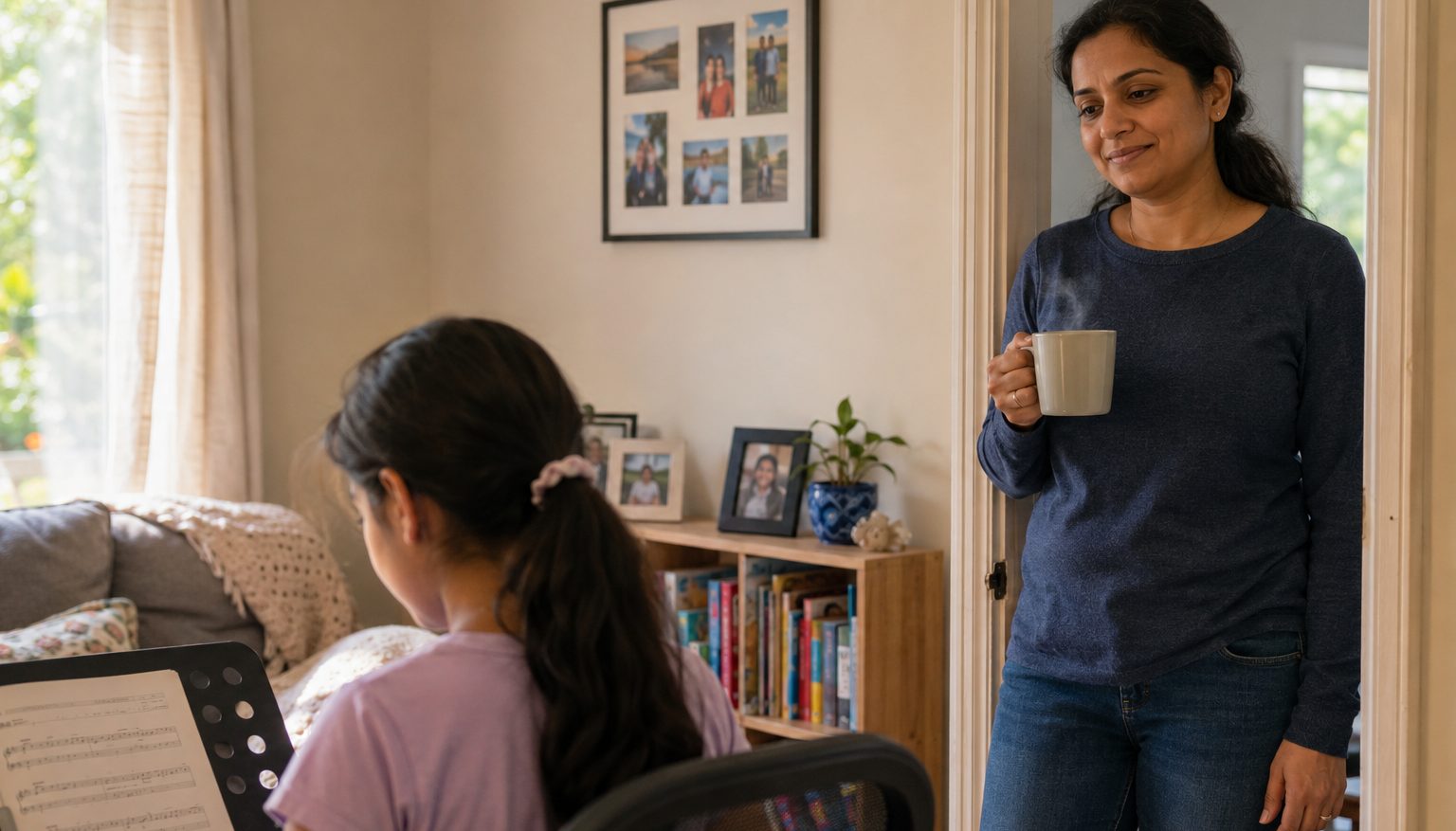
The single biggest predictor of whether a child keeps playing music isn’t talent. It isn’t the quality of the teacher, though that matters. It isn’t even how much they practice. It’s whether a parent in the home creates the right kind of environment around their music learning, interested but not pressuring, supportive but not micromanaging, present but not performing the role of practice cop.
That balance is harder than it sounds, especially for engaged parents who genuinely want their child to succeed. Here’s what actually works.
Show Real Interest in the Music Itself
The most powerful thing you can do is treat your child’s music as something interesting in its own right, separate from whether they’re improving. Ask them to play you the part they like best. Ask what their favorite song is right now. Listen for ten focused minutes a few times a week. Notice things (a clean transition, a phrase that sounds expressive) and mention them specifically.
This sends a message that the music has value to you, not just the achievement of being-good-at-music. Kids absorb that distinction quickly. The ones whose parents care about the music itself keep playing. The ones whose parents only care about the progress often quit when progress slows.
Be the Practice Anchor, Not the Practice Enforcer
Most kids (especially under age ten) need an adult to help them remember to practice. That’s normal. The question is how you provide that scaffolding.
What works: building a consistent time slot into the family routine, the same way you’d anchor homework or chores. “Practice happens right after snack, before screens” is a structural cue, not a parent-child negotiation. The child knows what comes next.
What doesn’t work: daily reminders that escalate to nagging. “Did you practice today? You haven’t practiced. Practice now.” This pattern reliably trains the child to associate the instrument with parental friction.
If you find yourself reminding more than three or four times a week, change the structure, not the volume of reminders. A clear daily anchor removes the conversation entirely.
Help With Logistics, Not Technique
It’s tempting, especially if you played music as a kid yourself, to correct your child’s playing. Resist that urge unless you are a serious musician yourself and your child has explicitly invited the feedback. Even then, hold back.
The teacher is the technique authority. Your authority is the home environment. If you start correcting hand position or pitch from the kitchen, you’re competing with the teacher and undermining the relationship the child has with them. The teacher will say one thing, you’ll say another, and the child will tune out both.
Where you can help: tuning the instrument, finding the sheet music, making sure the practice space is set up, recording a short video of a hard passage so the teacher can review it.
Make the Lesson Itself Sacred
If lessons get rescheduled often, kids learn that lessons are optional. If they happen on the same day and time every week, kids learn that this is part of how their week works.
Show up to the lesson space (even if it’s online and in your living room) without phones or interruptions. Don’t take work calls in earshot. Treat the half-hour as a real appointment. This communicates respect for both the teacher and the work, which children quietly absorb.
After the lesson, ask one open-ended question, “What did you work on today?” or “What’s your homework for this week?”, and then drop it. You’re not interrogating. You’re showing interest.
Celebrate Effort, Not Just Outcomes
Praise tied to effort builds long-term motivation. Praise tied only to talent or achievement teaches children to avoid challenges where they might not look talented.
“You worked through that hard part for ten minutes straight today. That’s exactly what good practice looks like” is far more useful than “You’re so musical.” The first sentence reinforces the behavior that builds a musician. The second sentence creates pressure to live up to an identity that becomes scary when things get hard.
For more on the deeper benefits of music for kids, see our guide on the science-backed benefits of music lessons for kids.
When to Step In (And When to Stay Out)
Step in when:
- The practice anchor is breaking down, talk to the child and reset the structure.
- The child is consistently frustrated for weeks, not just days, talk to the teacher, not to the child first.
- The instrument has physical issues (out of tune, broken, the wrong size), fix it quickly.
- The teacher-student fit feels off, trust your instinct. A trial with a different teacher costs little.
Stay out when:
- The child is having a hard practice and complaining. Some practices are like that. Let the teacher address it next lesson.
- The child wants to play the “wrong” song or instrument. Within reason, follow their curiosity. A motivated student playing music they love grows faster than a resigned one playing the right thing.
- The child plateaus. Plateaus are normal and need patience, not parental intervention.
How to Find the Right Teacher on Tunelark
Every teacher on Tunelark is hand-vetted for credentials, teaching experience, and ability to teach online effectively. Especially for kids, the fit matters as much as the resume. To get started:
1. Browse our teacher list and filter for your child’s instrument.
2. Read bios closely. Look for teachers who mention working with kids and describe their teaching philosophy clearly.
3. Book a trial lesson with one whose profile resonates. Sit in on the first lesson if your child wants you there, then step back.
4. After a few weeks, ask your child what they think of the teacher. Trust their answer.
The parents who get the best long-term outcomes from their kids’ music learning aren’t the most musically knowledgeable parents. They’re the ones who build a steady home rhythm, take real interest in what their child is making, and trust the teacher to handle the technical side. Be that parent and the music almost always sticks.
How to Find a Good Music Teacher on Tunelark
When it comes to finding the right teacher for your child, fit matters more than credentials. Many Tunelark teachers specialize in working with kids and know how to make lessons engaging without losing structure.
1. Browse our teachers and filter by your chosen instrument.
2. Read bios. Look for teachers who explicitly mention working with children in your child’s age range. Teaching a seven-year-old is a different skill from teaching a teenager.
3. Book a trial lesson with one whose profile resonates.
After the trial, ask yourself: did your child seem engaged and curious, or just polite? That’s the signal that matters most.
The right teacher does more than teach the instrument. They build the relationship that makes a child want to keep showing up.
Frequently Asked Questions
How involved should I be in my child’s practice?
Younger children (under 8) often need a parent sitting nearby for help and focus. Older kids do better with parents giving space but available. Avoid hovering. It backfires.
What if my child resists practicing?
Talk to the teacher before escalating. Resistance usually means something specific: a difficult piece, boredom with current music, or stress elsewhere. Address the cause, not the behavior.
Should I correct my child’s playing if I notice mistakes?
No, unless the teacher has asked you to. Let the teacher handle technique. Your role is encouragement and consistency, corrections from a non-musician parent often confuse the child.
How can I show interest without putting pressure on my child?
Ask what they’re working on, listen to short performances, attend recitals enthusiastically. Avoid comparisons to other children or focusing on speed of progress.
What if my child wants to quit?
Don’t panic. Talk to your child to understand why, then talk to the teacher. Quitting after a long break or due to burnout is different from quitting due to dissatisfaction. Each has different solutions.
Keep reading
About Jennifer Heath
I'm Jennifer Heath, VP at Tunelark and a lifelong singer. I joined the company in 2020 and oversee much of what makes Tunelark work for our students and our teachers. That includes hiring, training, and supporting our instructors, customer and student support, marketing, and the day-to-day operations of the business.
I started voice lessons at age 7, sang with professional choirs that toured internationally through my teens, and performed solo at competitions and community events across Texas before stepping away in my twenties to study other interests, including business management. I haven't performed professionally in years, but I'll happily take the microphone at a karaoke night. Music has been in me every day of my life. Being able to spend the last six years working inside an online music education company, while traveling the world full-time, has been a perfect fit.
I believe deeply that music belongs in every life. For the self-expression, the discipline, the comfort, and the simple joy of it.
The Tunelark blog is where we share what we've learned about online music lessons: how to choose an instrument and a teacher, what to expect from your first lesson, how the major platforms compare, and how to keep music going through the busier seasons of life. Practical, honest writing you can act on.
Who we are
Tunelark provides virtual 1-on-1 music lessons to learners
of all ages.
We remove the barrier of geography and connect learners and teachers — wherever they are. Our growing community of vetted, experienced music educators have expertise in a wide variety of instruments, genres, and skill levels. We are passionate about connecting each student with the perfect instructor.

