
Online vs. In-Person Music Lessons: An Honest Comparison
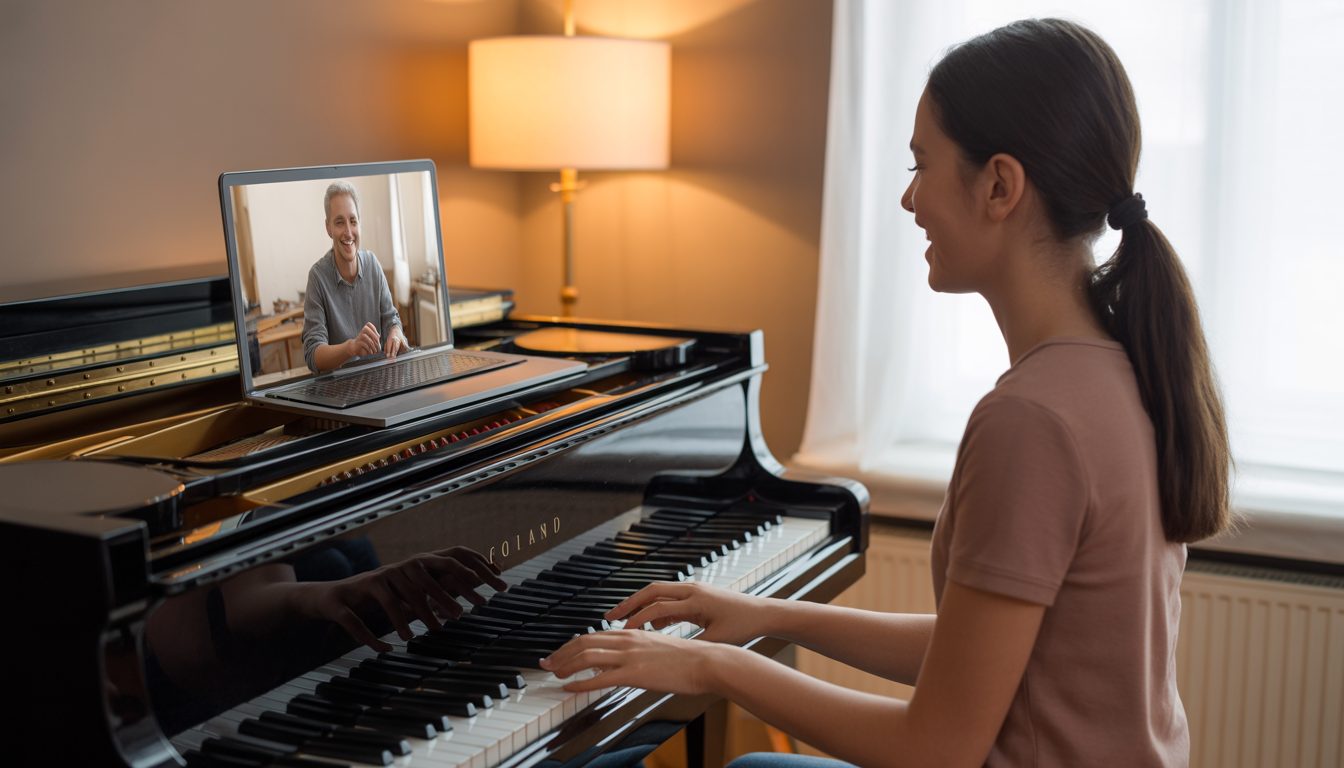
The short answer: both work. The longer answer is that the right choice depends on your situation, your instrument, and what you value most in a lesson experience. This is an honest comparison, not a pitch for one format over the other.
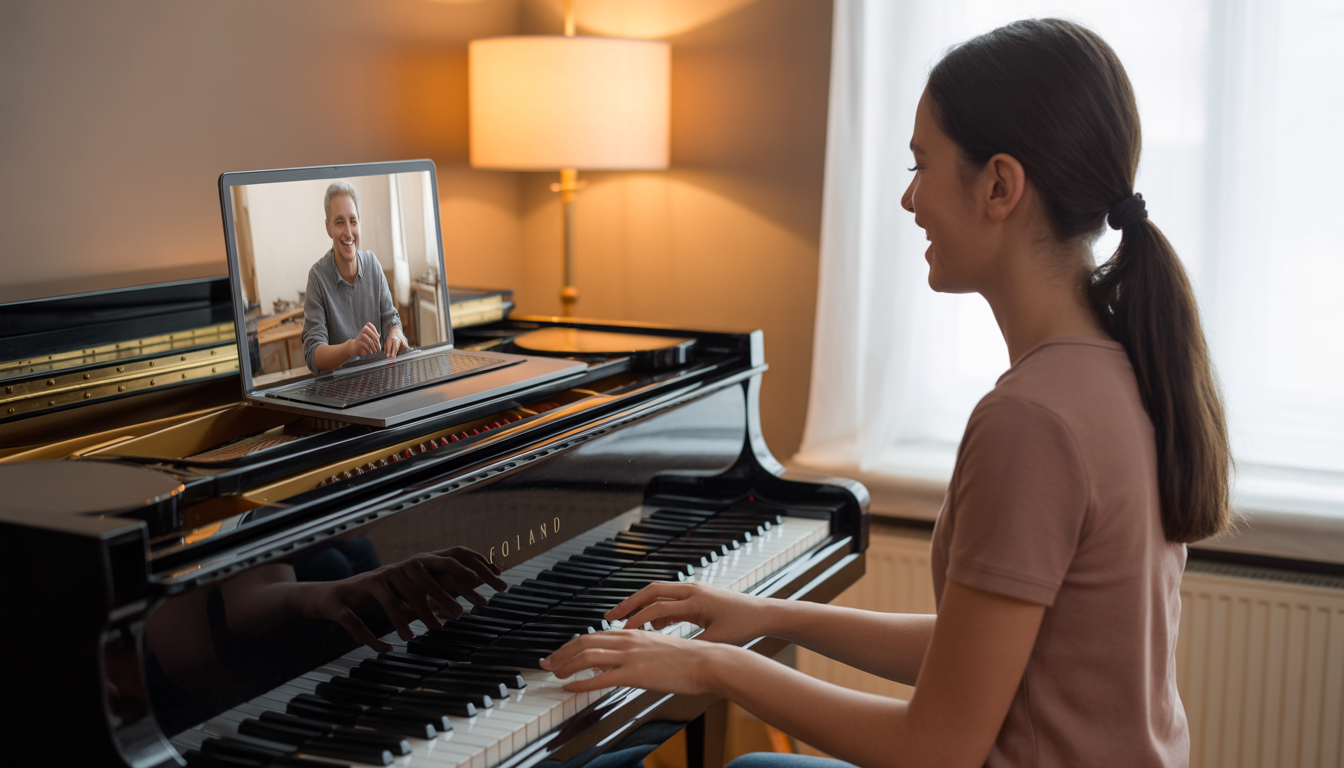
Where Online Lessons Win
Scheduling flexibility
Online lessons open up a significantly larger pool of available teachers and time slots. Without travel time as a constraint, early mornings, lunch breaks, and late evenings all become practical. Students with demanding schedules consistently find online lessons easier to sustain consistently over time.
Access to better teachers
Geography no longer limits your choices. A student in a small town who would otherwise be stuck with whoever is local can now work with a specialist in jazz piano in New York or a classically trained violinist in Chicago. This is arguably the biggest advantage of online lessons, the best teacher for your goals is now accessible regardless of where you live.
Cost
Online lessons often cost less than in-person, in part because teachers don’t have studio rental costs and don’t factor in travel time. The difference varies by teacher and market, but on average online rates are somewhat more competitive.
Consistency
Bad weather, traffic, and the friction of getting out the door cause more in-person lessons to be canceled than most students realize. Online lessons have a significantly lower cancellation rate for students, which compounds into more progress over time.
Practice environment continuity
When lessons happen where you practice, your teacher can assess how you actually sound in your real setup, not just how you perform in a neutral studio. This can lead to more practical, relevant feedback.
Where In-Person Lessons Win
Physical adjustments
An in-person teacher can physically adjust a student’s bow hold, correct posture by touch, or reposition hands. For some instruments and some students (particularly young children in the early stages) this tactile correction can be valuable. Experienced online teachers compensate with verbal and visual cues, but it’s a real difference.
Playing together in real time
Internet latency makes it impossible to play in true real-time synchronization over video. In-person lessons allow teacher and student to play duets, with the teacher modeling in context. Some musical interactions simply work better in the same room.
Non-verbal communication
An experienced in-person teacher picks up on subtle physical tension, facial expressions, and body language that a camera might miss. This gets easier with good camera positioning, but in-person instruction does provide a fuller read on the student.
Ensemble and group settings
Group lessons, chamber music, and band settings are much more practical in person. If your primary goal is ensemble playing, you’ll likely want a combination of private online lessons and in-person group work.
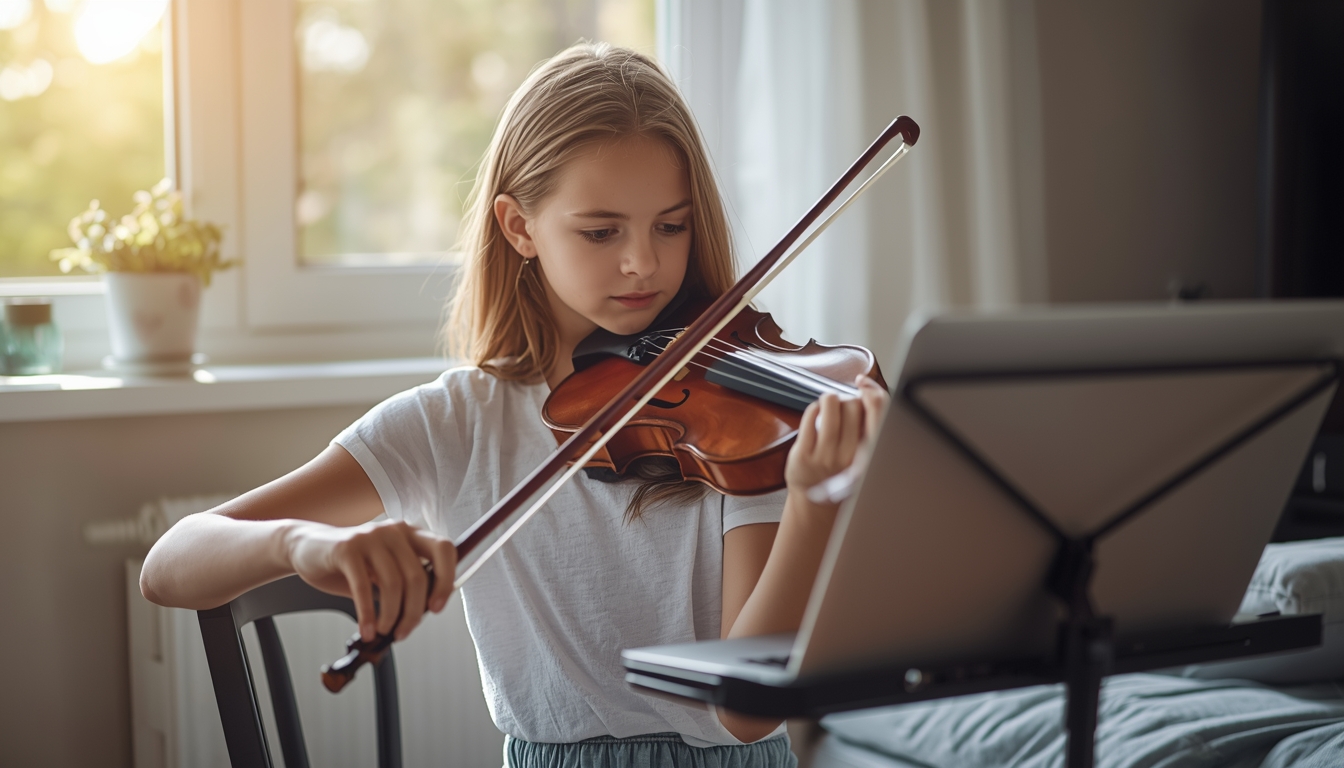
Side-by-Side Comparison
Here’s a summary of the key differences:
| Factor | Online | In-Person |
|---|---|---|
| Teacher selection | Global pool | Local only |
| Scheduling | More flexible | Limited by travel |
| Cost | Often lower | Often higher |
| Physical corrections | Verbal/visual only | Touch possible |
| Playing together | Latency prevents it | Real-time possible |
| Lesson outcomes | Comparable | Comparable |
Ready to experience online lessons for yourself? Browse teachers on Tunelark and book a trial lesson. It’s the best way to find out which format works for you.
Who Should Choose Online
- Students who want the best available teacher, not just the best local one
- Adults with busy schedules who need maximum flexibility
- Students in areas with limited local teacher availability
- Anyone who struggles with lesson consistency due to commute
- Students returning to an instrument after a break who want a low-friction restart
Who Should Consider In-Person
- Young children (under 7) who may benefit from physical guidance in very early stages
- Students whose primary goal is ensemble or group playing
- Students who have a strong personal connection with a local teacher they don’t want to lose
- Anyone with significant internet reliability issues
The Bottom Line
For the vast majority of students, online lessons deliver outcomes equivalent to in-person: with more teacher choices, better scheduling, and often lower cost. The question isn’t which format is objectively better; it’s which one you’ll actually show up for consistently. Consistent lessons with a good online teacher will always beat sporadic lessons with a great in-person one.
How to Find a Good Music Teacher on Tunelark
Once you’ve weighed the options, the next step is finding a teacher who actually fits you. Tunelark’s marketplace lets you compare profiles, watch intro videos, and book a trial lesson before committing.
1. Browse our teachers and filter by your chosen instrument.
2. Read bios. Look for teachers whose style, experience, and rates align with what you’re looking for. Profile videos tell you more than bios.
3. Book a trial lesson with one whose profile resonates.
After the trial, ask yourself: did the lesson feel like the right level and pace, or like a sales pitch?
Tunelark gives you a low-risk way to test the fit before committing. Use it.
Frequently Asked Questions
Are online music lessons as good as in-person?
For most students, yes. Research shows comparable outcomes between online and in-person instruction when teacher quality is held constant. The format matters less than the teacher’s skill and the student’s consistency.
What are the main disadvantages of online music lessons?
The main limitations are audio latency (which prevents playing in real time together), the inability to physically adjust a student’s posture or technique, and the requirement for a stable internet connection. For most students, these are minor compared to the scheduling flexibility and access benefits.
Is in-person better for beginners?
Not necessarily. Beginners often do very well online: the foundational technique that matters most in early learning (posture, hand position, note reading) is fully evaluable on camera. Some beginners benefit from in-person instruction for physical corrections, but many excellent teachers handle this effectively via video.
Can I switch from in-person to online lessons?
Yes, and many students do. The transition usually takes a lesson or two to adjust, after which most students find the experience comparable or prefer the convenience of online.
Frequently Asked Questions
Are online music lessons actually as good as in-person?
For most students and most instruments, yes. The research and practical experience of thousands of students support this. The main advantage of in-person (physical proximity for hands-on adjustments) matters most for instruments like cello or double bass. For piano, guitar, voice, and most other instruments, online lessons are equally effective.
What do you lose with online music lessons?
The main trade-off is the inability for a teacher to physically adjust your posture or hand position. A skilled online teacher works around this through clear verbal and visual instruction. For the vast majority of students, this trade-off is minor compared to the scheduling flexibility and access to better teachers that online provides.
What equipment do I need for online music lessons?
A computer or tablet with a camera, a reliable internet connection, and your instrument. A dedicated microphone or audio interface can improve sound quality, but most students start with what they already have and upgrade only if needed.
Do children do well with online music lessons?
Yes, especially children ages 7 and up. Younger children (5–6) often do best with a parent nearby to help with setup and attention. Most kids adapt quickly to the format.
Is it harder to stay motivated with online lessons?
Some students find it easier. Lessons happen in the comfort of home, without travel stress. Others prefer the energy of in-person. The good news is that with a teacher you connect with, motivation tends to take care of itself regardless of format.
Keep reading
About Jennifer Heath
I'm Jennifer Heath, VP at Tunelark and a lifelong singer. I joined the company in 2020 and oversee much of what makes Tunelark work for our students and our teachers. That includes hiring, training, and supporting our instructors, customer and student support, marketing, and the day-to-day operations of the business.
I started voice lessons at age 7, sang with professional choirs that toured internationally through my teens, and performed solo at competitions and community events across Texas before stepping away in my twenties to study other interests, including business management. I haven't performed professionally in years, but I'll happily take the microphone at a karaoke night. Music has been in me every day of my life. Being able to spend the last six years working inside an online music education company, while traveling the world full-time, has been a perfect fit.
I believe deeply that music belongs in every life. For the self-expression, the discipline, the comfort, and the simple joy of it.
The Tunelark blog is where we share what we've learned about online music lessons: how to choose an instrument and a teacher, what to expect from your first lesson, how the major platforms compare, and how to keep music going through the busier seasons of life. Practical, honest writing you can act on.
Who we are
Tunelark provides virtual 1-on-1 music lessons to learners
of all ages.
We remove the barrier of geography and connect learners and teachers — wherever they are. Our growing community of vetted, experienced music educators have expertise in a wide variety of instruments, genres, and skill levels. We are passionate about connecting each student with the perfect instructor.

