
How to Learn Music Theory as an Adult, Without the Textbook
Plenty of adults can play a little, sing a little, or pick out a melody by ear, and still feel a small flush of dread when someone says “circle of fifths.” Theory has a reputation as the homework of music, the part you were supposed to absorb at age nine, and many adult learners quietly decide it is too late to catch up.
It is not too late, and the catching up is faster than you think. Theory is a small set of patterns that repeat everywhere in music, and adults actually bring advantages to learning them: you already know what a chorus is, you can connect “relative minor” to songs you have heard ten thousand times, and you can direct your own practice. What trips adults up is not capacity. It is method. The textbook-and-memorization approach fails busy adults for predictable reasons, and there is a better way to do it.
Adults learn music just fine, and the research is encouraging
The aging brain holds up its end. A randomized controlled trial with adults aged 60 to 80 found that sixteen weeks of piano training improved executive function and verbal memory measures more than computer-based brain training did. A meta-analysis on musical practice in healthy aging linked music training in later life to better processing speed, attention, and reasoning. In a four-month study of adults aged 60 to 84, piano lessons improved mood and quality of life alongside the cognitive gains, while equally active control groups showed no comparable change.
None of that is a promise that music makes you smarter. It is solid evidence that adult brains respond to musical training at any age, which is the only permission slip most adult learners are waiting for. If you are still deciding whether to start at all, the case for learning music as an adult goes well past theory.
Why the textbook approach fails busy adults
The traditional route asks you to read explanations, memorize terminology, and trust that it will connect to actual music someday. For an adult with a job and a family, that fails in three specific ways.
Reading feels like progress but is not. Learning science calls the effective alternative retrieval practice: being asked a question and answering from memory strengthens the memory far more than re-reading ever will. Cramming fails too, because memory consolidates between sessions, and the research on distributed practice shows that the same total time spread across days beats one long sitting by a wide margin. And a workbook cannot tell you that you got something wrong until you check the answer key, by which point the moment the feedback could have taught you something has passed.
So the method that works for a busy adult is almost embarrassingly simple: short sessions, several days a week, made of questions you answer from memory, with corrections that arrive instantly. Which is a description of a game.
What ten minutes a day of theory games looks like
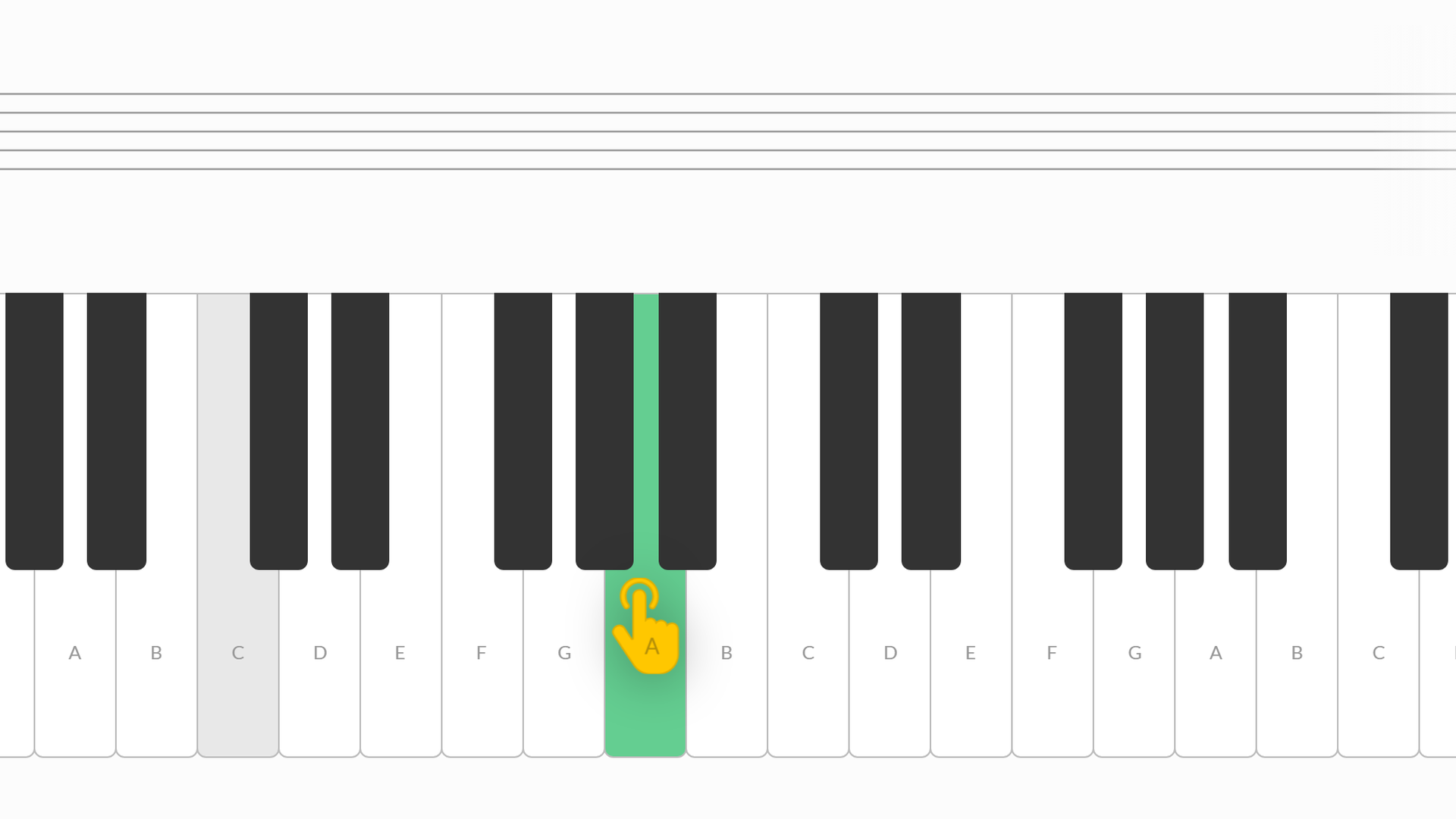
Tunelark’s music learning games were built on exactly those mechanics. More than 150 level-based games cover the full ladder: naming the notes on a keyboard, reading treble and bass clef, understanding major scales and the circle of fifths, building triads, and training your ear to recognize intervals and chord qualities. You answer on an on-screen keyboard, a MIDI keyboard, or with your acoustic instrument through the microphone, and every answer gets an immediate response.

The level structure does the planning for you. Each skill starts at genuinely easy and climbs one notch each time you demonstrate mastery, so the difficulty stays in the zone where a session feels like a winnable challenge instead of a test. Miss too much and the game gently narrows until you are solid. Ten focused minutes with your morning coffee, a few times a week, moves you up the ladder faster than a Saturday hour with a workbook, and your progress saves so every session picks up where the last one ended.
Ear training deserves a special mention, because it is the part of theory adults most often skip and most enjoy once it clicks. Recognizing a perfect fifth or hearing the difference between a major and minor triad turns theory from vocabulary into something you can actually hear in the music you already love.
If you want to feel the format before committing to anything, you can play a demo game right now, no account needed. Tunelark private lesson students get the full library free with their lessons, and if you like watching your own numbers climb, the games pair naturally with tracking your practice progress.
Where theory connects back to real music
Drilling alone will not make you love the circle of fifths. The moment theory becomes permanent is the moment a teacher shows you the pattern living inside a song you care about: the chorus that lifts because it borrows the relative major, the bass line walking down the scale you just learned. That is why the games work best as the between-lessons half of a partnership. The game makes note names and intervals automatic, and your teacher spends lesson time connecting them to the music you are actually playing. If you want the fuller argument for why the vocabulary is worth having at all, we have made the case for music theory separately, and if you are picking up music again after years away, starting as an adult has its own guide.
How to Find a Music Teacher on Tunelark
A teacher who knows you are drilling fundamentals between lessons can aim every lesson at the good stuff. Finding one takes a few minutes:
1. Browse teachers at tunelark.com/find-a-teacher and filter by your instrument or voice.
2. Read a few bios and watch the intro videos. Look for someone who teaches adults regularly.
3. Book a trial lesson and mention you want theory woven into real songs.
4. Afterward, ask yourself how you feel. If you left curious and encouraged, you found your teacher.
Frequently Asked Questions
Am I too old to learn music theory?
No. Controlled studies of adults from their twenties through their eighties show measurable gains in musical skill and in supporting cognitive abilities after months of training. Adults also bring decades of listening experience, which gives theory concepts something real to attach to from day one.
How long does it take an adult to learn basic music theory?
With short, regular practice, the fundamentals come faster than most people expect. Note reading, major scales, basic chords, and beginner ear training are typically comfortable within a few months of ten-to-fifteen-minute sessions a few times a week. Fluency keeps deepening from there, especially once a teacher connects the concepts to repertoire.
Do I need to read sheet music to learn theory?
Reading and theory reinforce each other, but you can start either first. Note reading games treat the staff like a map you learn one landmark at a time, and ear training requires no reading at all. Many adults find reading finally sticks once the theory behind it makes sense.
What is the best way to practice music theory between lessons?
Short, spaced, active sessions. Answer questions from memory rather than re-reading explanations, spread practice across several days, and get feedback on every answer as immediately as possible. Level-based games are built around exactly those three principles, which is why they outperform workbook study for most busy adults.
I play guitar, not piano. Why are the games built around a piano keyboard?
Because the keyboard is the clearest visual map of how music is organized, which is why theory classrooms use one regardless of what instruments the students play. Every note sits in a visible row, and intervals and chords are shapes you can see. The concepts transfer directly, your teacher helps you translate them onto your own instrument, and the ear training games do not involve the keyboard at all.
Are Tunelark’s music theory games free?
They are included free for every Tunelark private lesson student and teacher, and verified school classroom teachers can get free access for their classes. A no-account demo game is available for anyone who wants to try the format first.
Keep reading
About Jennifer Heath
I'm Jennifer Heath, VP at Tunelark and a lifelong singer. I joined the company in 2020 and oversee much of what makes Tunelark work for our students and our teachers. That includes hiring, training, and supporting our instructors, customer and student support, marketing, and the day-to-day operations of the business.
I started voice lessons at age 7, sang with professional choirs that toured internationally through my teens, and performed solo at competitions and community events across Texas before stepping away in my twenties to study other interests, including business management. I haven't performed professionally in years, but I'll happily take the microphone at a karaoke night. Music has been in me every day of my life. Being able to spend the last six years working inside an online music education company, while traveling the world full-time, has been a perfect fit.
I believe deeply that music belongs in every life. For the self-expression, the discipline, the comfort, and the simple joy of it.
The Tunelark blog is where we share what we've learned about online music lessons: how to choose an instrument and a teacher, what to expect from your first lesson, how the major platforms compare, and how to keep music going through the busier seasons of life. Practical, honest writing you can act on.
Who we are
Tunelark provides virtual 1-on-1 music lessons to learners
of all ages.
We remove the barrier of geography and connect learners and teachers — wherever they are. Our growing community of vetted, experienced music educators have expertise in a wide variety of instruments, genres, and skill levels. We are passionate about connecting each student with the perfect instructor.

