
Is Saxophone Hard to Learn? An Honest Beginner’s Guide
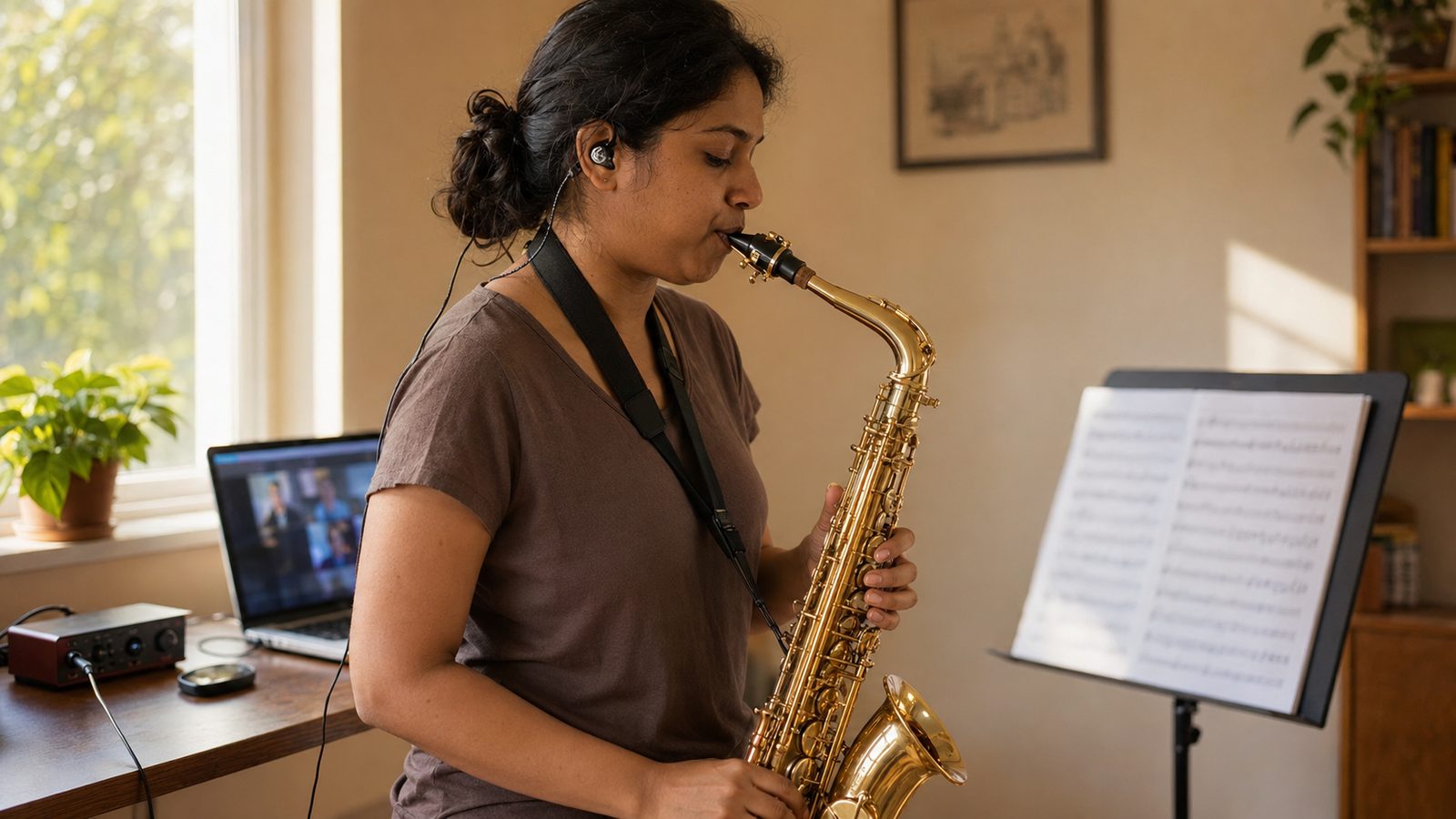
Is Saxophone Hard to Learn? An Honest Beginner’s Guide
Saxophone has a reputation problem. People who don’t play it assume it must be brutally hard, all that brass, all those keys, that big confident sound. People who do play it sometimes oversell how easy it is. The truth sits between those two stories, and it’s worth getting right before you commit to an instrument.
So is saxophone hard to learn? The honest answer is that saxophone has one of the most accessible on-ramps of any wind instrument, but the road to real mastery is long. If you set your expectations correctly, the first few months can be surprisingly rewarding.
The Honest Answer (And Why It Matters)
The reason “is saxophone hard to learn” doesn’t have a clean yes-or-no answer is that the difficulty curve is unusual. Most instruments are hard at the start and gradually get easier as your hands learn what they’re doing. Saxophone is the reverse for the first stretch: producing a tone is comparatively easy, and the keys are laid out in a way that makes basic scales reachable within weeks. Then the curve flips, and the things that separate a beginner from an intermediate player (tone control, intonation, articulation, vibrato, expression) turn out to take years of patient work.
Getting clear on this matters because it changes how you measure progress. If you expect saxophone to be hard at the start, you’ll be pleasantly surprised. If you expect to sound like a pro after a year of casual practice, you’ll be discouraged. Neither expectation is right.
What’s Surprisingly Accessible
A few things about saxophone are genuinely easier than people expect.
Producing your first note. Most beginning saxophone students get a real, recognizable saxophone sound in their first lesson. It might be uneven, and the tone won’t be polished, but it’s a note. Compare that to violin or trumpet, where producing a clean tone can take weeks of dedicated work.
The key layout. Saxophone keys are designed to fall naturally under the fingers. Basic fingering patterns are intuitive, and the major scales overlap in helpful ways. You can play simple melodies within a few weeks.
Reading music for it. Saxophone uses treble clef, which is the most commonly taught clef. Sheet music for beginning sax players is widely available at every level.
Sounding good early. Even an imperfect saxophone tone has personality. A beginning sax player playing a simple melody actually sounds like music, which is enormously motivating, especially in the first few months when most beginners are tempted to quit.
What’s Genuinely Hard
This is where the honesty matters.
Tone control. Anyone can make a sound on a saxophone. Making a consistent, warm, controlled tone across the full range of the instrument takes years. Tone is the single biggest separator between beginning and intermediate players, and it’s mostly invisible work, adjusting embouchure, breath support, and air speed in tiny, ongoing increments.
Intonation. Saxophone is not a fixed-pitch instrument. Every note can be played slightly sharp or flat depending on embouchure and air, and learning to hear and correct your own pitch is a skill that develops slowly.
The altissimo register. The high notes above the standard range require specialized technique that most students don’t reach for years.
Endurance. Holding a steady tone for a full song without your embouchure giving out takes physical conditioning. Beginners are often surprised how tired their face and lungs feel after twenty minutes.
Reed management. Saxophone reeds vary in quality, behave differently in humid versus dry conditions, and wear out unpredictably. Learning to manage reeds is part of the instrument, and it takes patience.
What the First Three Months Look Like
A realistic snapshot of where most beginners land after three months of regular practice:
- Producing a stable tone on most notes in the middle register.
- Playing basic major scales (C, F, G, B-flat) at moderate speed.
- Reading simple melodies and playing them recognizably.
- Some control over starting and stopping notes cleanly.
- A growing sense of what good intonation sounds like, even if you can’t always produce it yet.
What you probably won’t have yet: a polished tone, fast technical passages, the high register above the staff, or the ability to improvise. Those come later, and they’re worth the wait.
If you’re planning a first lesson, our guide to what to expect from a first online lesson covers what the experience itself feels like and how to prepare.
What Speeds Up the Learning Curve
A few habits make a real difference in how fast saxophone progress comes.
Daily practice in short sessions. Twenty minutes a day beats two hours on Saturday. Embouchure development is a physical process, and it builds with frequent, consistent contact.
Long tones. Every serious saxophonist practices long tones: holding individual notes for as long as possible, working on stability and tone. They feel boring. They’re the single most valuable practice you can do.
A good teacher catching small problems early. Embouchure habits, hand position, and air support are easy to fix in the first few months and very hard to fix after a year. The right teacher in the first phase is worth more than at any other point. We have more on this in what beginning music lessons are really like.
Recording yourself. What you hear while playing is not what other people hear. Recording short practice sessions and listening back is the fastest way to develop ear awareness.
Listening to great saxophone players. Your tone goal lives in your ear before it lives in your instrument. Spending time with recordings of players you admire is real practice.
For more on the specifics of online sax instruction, our guide to online saxophone lessons covers the practical side.
How to Find a Saxophone Teacher on Tunelark
The right teacher accelerates everything about the early saxophone learning curve. Here’s how to find one.
1. Browse our teachers and filter by your chosen instrument.
2. Read bios. Look for teachers who mention beginning students and tone development, not just advanced repertoire.
3. Book a trial lesson with one whose profile resonates.
4. After the trial, ask yourself whether the teacher diagnosed something specific about your playing. That’s the sign of someone who’ll actually help you improve.
Saxophone rewards patience more than most instruments. The right teacher makes the patience worth it.
Frequently Asked Questions
Is saxophone harder than clarinet?
In some ways yes, in some ways no. Clarinet is harder at the very start. The embouchure is more demanding and the keys are less forgiving. Saxophone is harder over the long term because tone control and intonation are more open-ended. Beginners often find saxophone easier for the first six months and clarinet players often catch up after that.
How long until I sound good on saxophone?
Sounding recognizable takes about three months of consistent practice. Sounding pleasant takes about a year. Sounding genuinely good takes several years of patient work. None of those timelines change much regardless of age. It’s about practice hours, not starting age.
Do I need to play piano first?
No. Many saxophone players never play piano, and learning the saxophone doesn’t require any prior musical background. Some basic music reading helps, but a good teacher will build that with you from the first lesson.
Should I start on alto or tenor saxophone?
Almost always alto. It’s smaller, lighter, easier to produce a tone on, and the standard starting instrument for beginners of any age. Tenor is a wonderful instrument to move to later, but the alto is the right first step.
Can I learn saxophone as an adult?
Absolutely. Adults often learn saxophone faster than children in the early stages because they understand instructions, can self-direct practice, and have the patience for long-tone work. The instrument is friendly to adult beginners.
Looking for an online saxophone teacher? See our full Online Saxophone Lessons page for everything you need to know about getting started.
Keep reading
About Jennifer Heath
I'm Jennifer Heath, VP at Tunelark and a lifelong singer. I joined the company in 2020 and oversee much of what makes Tunelark work for our students and our teachers. That includes hiring, training, and supporting our instructors, customer and student support, marketing, and the day-to-day operations of the business.
I started voice lessons at age 7, sang with professional choirs that toured internationally through my teens, and performed solo at competitions and community events across Texas before stepping away in my twenties to study other interests, including business management. I haven't performed professionally in years, but I'll happily take the microphone at a karaoke night. Music has been in me every day of my life. Being able to spend the last six years working inside an online music education company, while traveling the world full-time, has been a perfect fit.
I believe deeply that music belongs in every life. For the self-expression, the discipline, the comfort, and the simple joy of it.
The Tunelark blog is where we share what we've learned about online music lessons: how to choose an instrument and a teacher, what to expect from your first lesson, how the major platforms compare, and how to keep music going through the busier seasons of life. Practical, honest writing you can act on.
Who we are
Tunelark provides virtual 1-on-1 music lessons to learners
of all ages.
We remove the barrier of geography and connect learners and teachers — wherever they are. Our growing community of vetted, experienced music educators have expertise in a wide variety of instruments, genres, and skill levels. We are passionate about connecting each student with the perfect instructor.

