
How to Run a First Trial Lesson Online That Turns Into a Long-Term Student
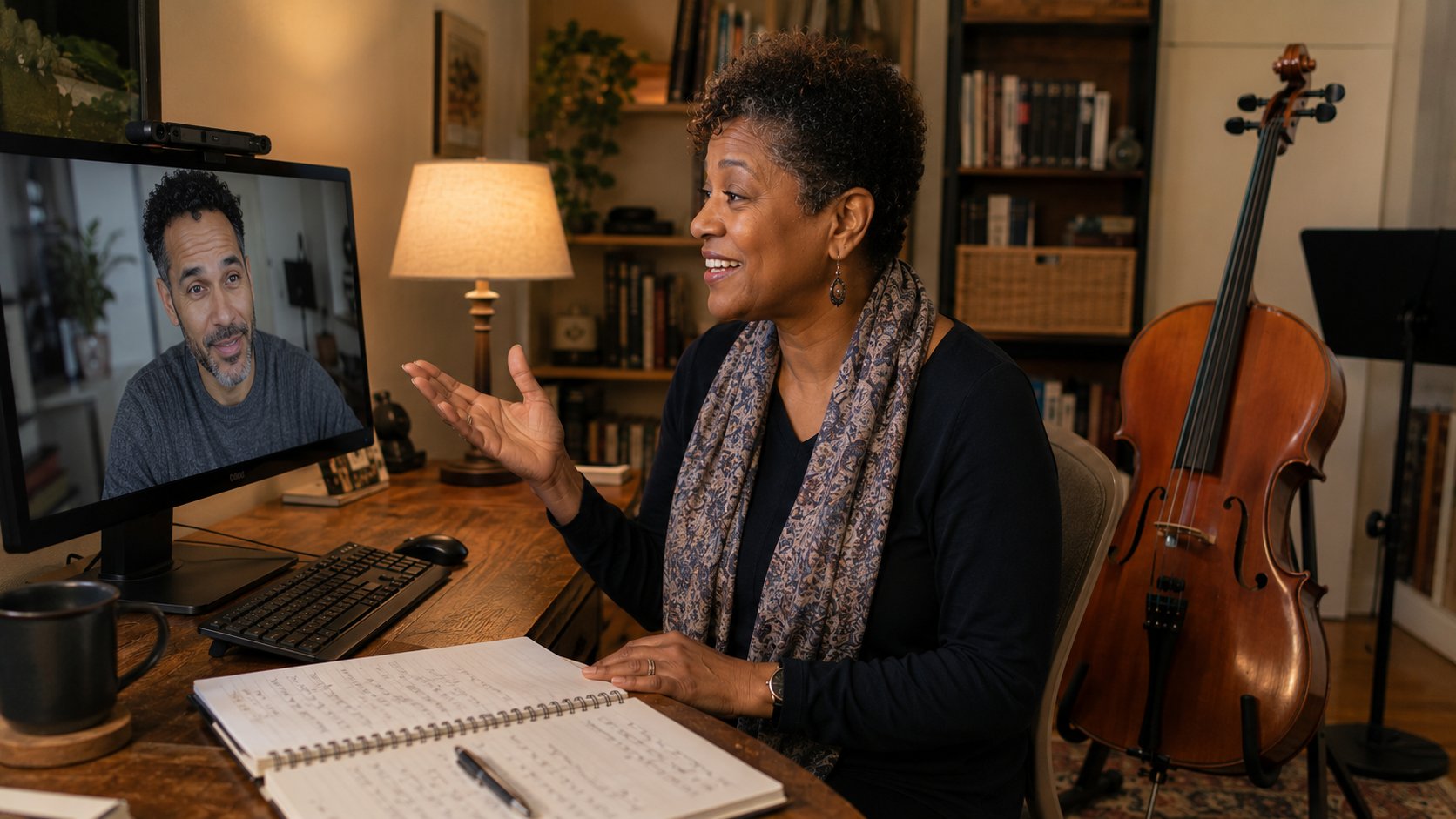
The trial lesson is the single highest-leverage lesson in your teaching business. It decides whether a prospect becomes a student who pays you for two years or a name that never replies. In person, a trial benefits from social momentum you do not control: the prospect drove to your studio, met you face to face, and feels the small social cost of walking away. Online, none of that exists. A student can close the tab and ghost you with zero friction, and they often will. The trial has to carry the entire weight of the decision by itself.
That changes how you should run it. The goal is not to teach a great lesson in the abstract. The goal is to engineer a specific experience that makes continuing feel like the obvious choice. Below is a working playbook: what the trial is actually for, a minute-by-minute script, the levers that move conversion, exact follow-up wording, and how to handle the case where you are not the right fit.
What a Trial Lesson Is Actually For
The most common mistake is treating the trial like a regular lesson. It is not. A trial has three jobs, and a weak trial only does the first.
- Diagnose. Find out where the student actually is, what they want, what is realistic, and whether there is a fit problem you should name now rather than three months in.
- Demonstrate. Show them what working with you week after week would feel like: your warmth, your eye, your ability to make a hard thing easier in real time.
- Decide. Both of you decide whether to continue. You are screening too, not just selling.
Most struggling teachers nail the diagnosis and skip the demonstration. They assess the student thoroughly, hand back a list of weaknesses, and the student leaves with information but no felt sense of progress. Adults in particular are weighing exactly the qualities students value in a teacher, and “this person noticed something and fixed it in front of me” is the one that closes.
The Pre-Lesson Setup That Prevents a Lost Sale
Online, a tech failure in the first three minutes can cost you the student before you play a note. Prevent it on purpose.
If you run your own enrollment, send a short email 24 to 48 hours before the trial. Keep it to four lines: what to have ready (instrument tuned, a piece they already know, a phone or stand so you can see their hands or face), the platform link, a note to join from a laptop on wifi rather than a phone on cellular, and one warm sentence about looking forward to it. This does three things at once: it lowers their anxiety, it pre-loads the lesson so you do not burn time on logistics, and it quietly signals that you are organized, which is one of the first things prospects screen for on a piano teacher buyer’s checklist or a voice teacher buyer’s checklist.
If you teach through a platform, most of that is already handled for you. Tunelark, for instance, tells each student what to have ready, walks them through how to connect and check their setup, and sends the lesson reminders automatically, so the prep email is not on your plate at all. That narrows your entire pre-lesson job to one thing: a short, warm note introducing yourself. The logistics an independent teacher has to chase are exactly the kind of overhead a good platform absorbs, which is one of the quieter reasons teaching on one is less work than it looks.
On your end, before they join: good light on your face, a second device or external mic if your audio is weak, and your camera angled so they can see your hands if you play an instrument where that matters. If you teach voice or piano, position so they can see the keyboard or your mouth and posture. Have a backup contact method ready (a phone number) in case the call drops, and say so. A dropped call you recover from gracefully actually builds trust; a dropped call with no plan ends the conversation.
A Trial Script With Timings (A 45-Minute Example)
Trial length is often not your call. On many platforms the student picks it, and on Tunelark the student chooses a 30, 45, or 60-minute slot when they book. The example below uses 45 minutes because it is a useful middle case: enough room for a real teaching moment without asking a stranger for a full hour. If your student booked 30 minutes, compress the diagnostic conversation and protect the one teaching moment at all costs; if they booked 60, widen the assessment and the vision rather than the small talk. The structure matters more than the clock.
Minutes 0 to 5: Tech check and welcome. Confirm you can see and hear each other clearly. Make a small joke about technology so a glitch feels normal, not fatal. This buffer is insurance.
Minutes 5 to 12: Diagnostic conversation. Do not ask “What are your goals?” It is too abstract and you get mush. Ask concrete questions that surface real answers: “What music do you put on when you want to feel good?” “Have you taken lessons before, and if so, what made you stop?” “What is one specific thing you would love to be able to play a year from now?” The “why did you stop” question is the most valuable one you will ask. It tells you exactly what failure mode to avoid and what this person is quietly afraid will happen again.
Minutes 12 to 20: Light playing assessment. Have them play or sing something they are comfortable with. Do not demand prepared material. Watch and listen for the one thing you can move today. You are not cataloging every flaw; you are hunting for the highest-leverage fix.
Minutes 20 to 32: The one teaching moment. This is the heart of the trial. Pick a single concrete problem and solve it visibly. A hand-position change that makes the tricky bar playable. A breath setup that opens their tone on the spot. A counting trick that unlocks a rhythm they kept botching. Make the before and after audible: have them play it the old way, make one change, have them play it again. The student should hear the difference themselves. That contrast is the “aha” moment, and it is what they will remember and repeat to their spouse that night.
Minutes 32 to 40: The vision. Tell them where you would start and what the first few months would look like. Be specific: “We would spend the first month getting your left hand relaxed, because that tension is the thing slowing everything else down, and by month three you would be playing the verse of that song cleanly.” A concrete map signals competence far better than “lessons are tailored to you.” This is also where you connect the trial to the long game by hinting at how you keep students engaged once they join.
Minutes 40 to 45: Questions, logistics, soft close. Answer their questions, confirm the next step, and if you handle your own enrollment, state pricing plainly (more on this next). On a platform that already shows your rate and runs the booking, this is simply a warm “I would love to keep working together.” Do not pressure. End, do not trail off.
Pricing: Say It Plainly and Say It Early
Hiding your rate until the final minute makes students feel ambushed, and an ambushed prospect ghosts. Put pricing in the pre-lesson email or state it in the first few minutes, not the last. Say the number without flinching: “My ongoing lessons are 60 dollars for a 45-minute weekly slot.” Confidence in your own rate is itself a conversion lever; hesitation reads as “I am not sure I am worth this.”
Be ready to frame value, not just price. Students who understand what they are paying for stick, which is why it helps to point them to a plain-English breakdown of what online lessons cost and why. Decide your trial model in advance too. A free trial pulls more leads but more tire-kickers; a discounted paid trial (30 to 60 dollars) filters for people who are serious and have a card out already, which makes the yes easier. Both work. Pick one and be consistent.
One caveat: all of this is for teachers who handle their own enrollment. If you teach on a platform like Tunelark, your rate is set on your profile and the student saw it before they ever booked the trial, so you do not have to bring up money at all. That removes the single most awkward moment in the trial and lets you spend those minutes teaching and connecting instead of negotiating.
The Levers That Actually Drive Conversion
Three things, present together, convert trials reliably. Miss any one and the trial underperforms.
- Warmth that is real. Genuine curiosity about the student beats a more credentialed teacher who feels distant, every time. This is most of how students actually decide between teachers.
- One demonstrable win. Not a small note buried in a long lesson. A specific thing they could not have done at the start of the call and can do at the end.
- A concrete vision. A named plan with a timeline. Specificity is the signal that you have done this before and know where they are going.
The Soft Close: Exact Wording
A hard sell backfires with adults. Confidence that the lesson sold itself outperforms pressure. End the trial with something like: “I really enjoyed this. I think we would work well together, and I would love to keep going. I have openings Tuesdays at 4 and Wednesdays at 6 starting next week. Take a day if you need it, and just email me which works, or if you have any questions.” That gives a clear action, two concrete slots (choice between two yeses, not yes-or-no), and an explicit permission to think, which paradoxically makes people decide faster because they do not feel cornered.
The Follow-Up Sequence That Recovers Fence-Sitters
Online, the trial almost never converts in the room. People want a night to think, and without studio social momentum, it is frictionless for them to drift. A short, low-pressure follow-up sequence recovers a meaningful share of them.
One thing to settle first: who does this follow-up. The scripts below assume you are the one chasing the booking, which is true if you teach independently. On a platform like Tunelark, you are not. Tunelark runs the business side of re-booking, the system nudges a student who has not scheduled in a while and shows them exactly how to book again, so you are never put in a selling position. What Tunelark asks of teachers is almost the opposite of a sales follow-up: stay in a genuine relationship with your students. If someone booked a trial to prepare for an audition, the move is to message “How did the audition go?”, not “Are you ready to buy a lesson package?” The platform carries the transaction so you can carry the relationship, and the relationship is what actually retains students. The rest of this section is for teachers doing both jobs themselves.
If they said yes in the lesson: Within 2 hours, send the easy-start email. Scheduling confirmed, payment link, and the one or two things to practice this week. Reference the win from the trial: “Keep that relaxed left-hand position we found, that is your homework.” Speed and specificity make starting feel effortless.
If they asked for time: Wait 24 to 48 hours, then send one brief note. Sample: “Hi [Name], really enjoyed our lesson on Tuesday. No rush at all, just wanted to say I am holding that Wednesday 6pm slot for you through the weekend in case it is helpful. Happy to answer anything.” This stays warm, adds a gentle scarcity (the held slot), and does not beg.
If there is no reply after that: Send exactly one more message about 5 to 7 days later, then stop. Sample: “Hi [Name], I will release the slot I was holding so you are not on the hook, but the door is always open if you decide later. Wishing you the best with your playing.” One follow-up is appropriate, two is fine if spaced, three is pushy. Releasing the slot is a clean, dignified exit that often gets a reply precisely because the pressure is gone.
When You Are Not the Right Fit
Sometimes the trial reveals a genuine mismatch: they want jazz improv and you teach classical, the personalities grate, or their goals do not match how you work. Trying to keep them anyway costs you a draining student and a likely early churn that dents your long-term income.
Say it kindly and refer out: “Honestly, I think you would be better served by someone who specializes in [X]. Let me point you to a couple of people I trust.” This protects your time, their time, and your reputation. Students who get an honest referral remember it. They send you their friends, and they sometimes come back when their needs change. A clean no is worth more than a reluctant yes.
How Tunelark Vets Its Teachers, and Why It Matters for You
Most lesson marketplaces let almost anyone create a profile. Tunelark doesn’t, and the difference is structural rather than cosmetic: a smaller, genuinely vetted roster means each accepted teacher sees more of the incoming student demand, not less.
Our vetting is run by working musicians and music teachers with decades of teaching and performing experience, not a general recruiter or an HR screener. The people evaluating a pianist’s playing and teaching actually understand piano pedagogy. Specifically, the process includes:
- A sample performance. We ask to hear you play or sing. Musicianship is the foundation everything else is built on.
- A teaching sample. Performing and teaching are different skills, so we evaluate how you actually explain, diagnose, and correct, not just how well you play.
- Education and credential verification, plus background checks. We confirm your training and run background checks. That matters especially because many students are children.
- Testimonials from former students. We want evidence of real results with real learners, not just a résumé.
That depth is why “vetted” means something on Tunelark. It protects students, and it protects the teachers who clear the bar, because the roster stays selective enough that strong teachers actually get found instead of disappearing into a directory of hundreds.
Where Tunelark Fits for Teachers
Tunelark is a marketplace, not a matchmaker. We don’t assign students to teachers. We build the strongest accurate version of your profile, with photos, an introduction and performance video, testimonials, and your bio, and present it in our Find-a-Teacher search, where students browse and choose for themselves. You set your own rates and teach your own way; we don’t touch your curriculum.
We’re also honest about who the students are: most find us by searching for lessons online or through a referral, and many are beginners. What Tunelark provides is a steady stream of motivated inbound students you didn’t have to pay to acquire, with billing, scheduling, support, and payment processing handled for you, a 1099 at tax time, and a few data-backed policies, a 24-hour cancellation policy, limits on late teacher cancellations, and minimum availability, that exist because across more than 100,000 lessons they are what protects student retention and, with it, your income.
How to Become a Music Teacher on Tunelark
1. Apply to teach and submit a short profile.
2. Share a brief introduction along with a sample of your playing and your teaching.
3. Our team of experienced musicians and teachers reviews applications and follows up with teachers who meet the bar. We keep the roster selective on purpose.
4. Once you’re approved, you set your own rates, availability, and lesson approach, and we handle scheduling, billing, payments, and student discovery around you.
Tunelark works best for experienced teachers who care about long-term student relationships and want a platform that respects both their time and their craft.
Frequently Asked Questions
How long should an online trial lesson be?
It depends on who sets the length. If you run your own enrollment, 45 minutes is a strong default: 30 can feel rushed and 60 is more than most strangers want to commit. On many platforms the student chooses, and on Tunelark they pick a 30, 45, or 60-minute slot when they book. Whatever the length, protect the one visible teaching moment, since it is the biggest conversion lever, and scale the diagnosis and the vision up or down around it.
Should I offer a free or paid trial?
Both work; choose based on your funnel. Free trials generate more leads but attract more tire-kickers, so you spend unpaid hours on people who were never serious. A discounted paid trial (30 to 60 dollars) filters for committed prospects who already have a card out, which makes the eventual yes smoother. Newer teachers often go free to build volume; established teachers usually charge.
When should I tell a prospect my rate?
If you handle your own enrollment: early, never at the very end. Put it in the pre-lesson email or state it plainly in the first few minutes, since revealing your price only in the final minute makes students feel ambushed and they quietly disappear. State the number with confidence, since hesitation about your own rate signals you are not sure you are worth it. If you teach on a platform like Tunelark, this is moot: your rate is on your profile and the student saw it before booking, so you never have to raise money during the trial.
How do I follow up if they do not commit in the lesson?
If you teach independently and they asked for time, send one brief, warm note 24 to 48 hours later that mentions the slot you are holding for them. If there is still no reply, send exactly one more message about 5 to 7 days out that releases the slot and leaves the door open. Stop there. One spaced follow-up converts fence-sitters; a third message reads as desperate and kills trust. If you teach on a platform like Tunelark, the platform handles re-booking reminders for you, so your follow-up is not a sales task at all. It is simply staying in touch as a teacher, for example asking how the audition they were preparing for went.
What is the most important thing to do in a trial?
Deliver one specific, demonstrable win the student could not have produced on their own at the start of the call. Make the before-and-after audible: have them play it the old way, change one thing, have them play it again so they hear the difference themselves. That single “aha” moment converts trials more reliably than credentials, polish, or anything else you can do in the room.
Keep reading
About Jennifer Heath
I'm Jennifer Heath, VP at Tunelark and a lifelong singer. I joined the company in 2020 and oversee much of what makes Tunelark work for our students and our teachers. That includes hiring, training, and supporting our instructors, customer and student support, marketing, and the day-to-day operations of the business.
I started voice lessons at age 7, sang with professional choirs that toured internationally through my teens, and performed solo at competitions and community events across Texas before stepping away in my twenties to study other interests, including business management. I haven't performed professionally in years, but I'll happily take the microphone at a karaoke night. Music has been in me every day of my life. Being able to spend the last six years working inside an online music education company, while traveling the world full-time, has been a perfect fit.
I believe deeply that music belongs in every life. For the self-expression, the discipline, the comfort, and the simple joy of it.
The Tunelark blog is where we share what we've learned about online music lessons: how to choose an instrument and a teacher, what to expect from your first lesson, how the major platforms compare, and how to keep music going through the busier seasons of life. Practical, honest writing you can act on.
Who we are
Tunelark provides virtual 1-on-1 music lessons to learners
of all ages.
We remove the barrier of geography and connect learners and teachers — wherever they are. Our growing community of vetted, experienced music educators have expertise in a wide variety of instruments, genres, and skill levels. We are passionate about connecting each student with the perfect instructor.

