
Restarting Piano in Your 40s and 50s: What’s Different the Second Time
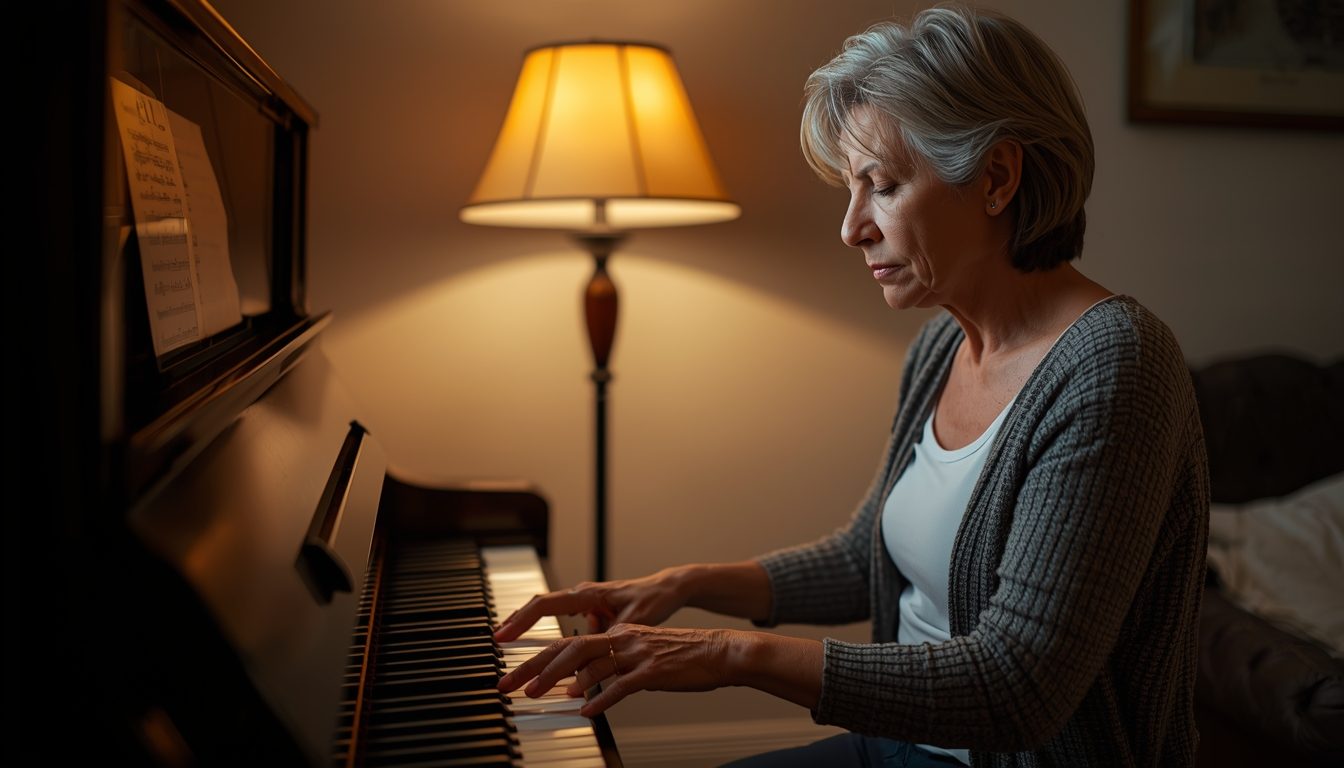
Restarting Piano in Your 40s and 50s: What’s Different the Second Time
You took piano as a kid. Maybe you made it through five years of lessons before giving up around middle school. Maybe you got further. Maybe you got less far than you wish you had. The sheet music’s been sitting somewhere, in a piano bench, in a box in the basement, in your parents’ house, and lately you’ve been thinking about it.
If you’re considering coming back to piano in your forties or fifties, here’s what’s actually different the second time around. Some of it will surprise you in a good way. Some of it will be harder than you expect. None of it is a reason not to start.
What Returns Quickly
The first surprise of restarting piano is how much you didn’t actually lose. The brain doesn’t fully delete years of learning. It puts them in storage. When you sit back down at a piano after decades, several things come back faster than you’d expect.
Note reading. This is the most pleasant surprise for most returners. The treble and bass clefs come back within hours, not weeks. You might be slow at first, but the basic recognition of notes on the staff is durable. Within a couple of weeks of regular practice, your reading is back to roughly where it was when you stopped.
Basic finger patterns. Scales, simple chord shapes, common five-finger positions. Your hands remember more than you think. The motor patterns that got drilled in as a kid resurface when you put your hands back on the keys. It feels eerie and reassuring.
Repertoire fragments. Pieces you played a hundred times as a kid come back in pieces. You probably won’t be able to play them through, but the opening will be there. The chord under the melody at measure eight will be there. Bits of the same piece you’ve forgotten will surface unprompted while you’re practicing something else.
Rhythm intuition. Counting, subdivision, the feel of common time signatures. These come back almost instantly. Even if you can’t articulate them, your body remembers.
This phase, the “remembering” phase, usually lasts two to six weeks. It’s encouraging and often emotional. People describe it as reuniting with a former version of themselves. Our article on restarting music lessons after years covers more about the emotional side of the return.
What’s Genuinely Harder Now
After the easy returns, the harder parts of restarting piano lessons as an adult start to show up. These are real, and naming them takes some of the sting out.
Finger speed. Adult fingers are less elastic than they were at age ten. Fast passages take longer to develop. This isn’t a function of practice quality. It’s a physical change. You can play any tempo you used to, but it takes more focused work to get there.
Technique habits formed wrong as a kid. This is the big one. If you learned with flat fingers, a collapsed wrist, or a tight thumb at age eight, those habits are now thirty years deep. They’re hard to undo. Most adult returners discover they have technical baggage that limits them, and the work of cleaning it up is real. Don’t try to do it alone.
Patience with simple material. As a kid, you played at the level you were at without questioning it. As an adult, sitting with the same five-finger exercises feels embarrassing because you remember playing real pieces. The mental challenge of accepting that you’re rebuilding from the foundation up is harder than the physical work.
Time and energy. You have less of both than you did at twelve. Practice has to fit around work, family, and decades of accumulated obligations. That’s not insurmountable (short, daily practice is what works anyway) but the rhythm of adult practice is different from childhood practice.
The recovery curve. A small physical strain that would have healed in two days at age fifteen takes a week at fifty. Pay attention to hand fatigue and don’t push through pain.
What’s Actually Better the Second Time
For all the harder parts, restarting piano as an adult has real advantages a child never has.
You chose this. Nobody is forcing you. The motivation is internal, which is the only kind that sustains long-term practice.
You understand what you’re doing. When a teacher explains harmony or form, you can hold onto the concept in a way a child can’t. You can articulate your own questions. You can analyze your own playing.
You know what music you love. As a kid, you played whatever your teacher assigned. As an adult, you can say “I want to learn this Chopin nocturne” or “I want to play hymns at church” or “I want to accompany myself singing folk songs.” Targeted goals produce better practice than open-ended ones.
You have realistic expectations. You’re not trying to win competitions or become a concert pianist. You’re trying to play music. That’s a healthier relationship with the instrument than a lot of trained kids ever develop.
The teacher pool is bigger and better. Online lessons mean you can find a teacher who specializes in adult learners, even if there isn’t one within fifty miles. The benefits of learning music as an adult extend beyond piano itself: better focus, sustained cognitive engagement, and a long-term project to keep returning to.
The Right Teacher for Returners
Finding the right teacher when you restart piano lessons as an adult is critical, and it’s different from finding a teacher for an absolute beginner. A returner needs:
Someone who can diagnose old technique. Your hand position, posture, and finger habits from childhood may have gaps. A teacher who’s worked with returners knows what to look for and how to gently rebuild.
Comfort with adult goals. A teacher who only knows how to teach a kid heading toward conservatory won’t serve you. You want someone who’s helped adults work toward “play this specific song for my anniversary” or “feel comfortable improvising in C major”, real adult goals.
Patience with the unevenness. A returner is uneven. Your reading might be solid while your technique is rough. You might play a passage from a piece you knew as a kid better than something simpler your teacher just assigned. The right teacher rolls with that and doesn’t try to standardize you.
Respect for what you bring. You’re not starting from zero. You’re returning. A good teacher treats your background as an asset, not an irrelevance.
For older returners specifically, our music lessons for seniors article covers what to look for in a teacher who understands the later-life learner.
How to Make the Restart Stick This Time
The reason many adult restarters quit again within a few months is usually the same: no clear path. Without a teacher, without a goal, without weekly accountability, the practice drifts and the motivation fades. Here’s what works.
Set one specific goal for the first six months: a song to learn, a piece to play, a recital to do with your kid. Concrete goals sustain practice.
Practice daily, briefly. Twenty minutes a day for five days beats one ninety-minute session on Sunday. Your nervous system consolidates skill between sessions, and long gaps reset it.
Get a teacher. The single biggest predictor of whether restarting piano sticks is whether you have a weekly lesson with someone you respect. Self-directed practice works for some, but the structure and accountability of lessons is unbeatable for most.
Don’t compare yourself to your childhood playing. The kid you were practiced two hours a day under parental enforcement. The adult you are has a different life. Different timeline, different metric of success.
How to Find a Piano Teacher on Tunelark
Many Tunelark piano teachers work specifically with returning adult students and understand the particular shape of this kind of restart.
1. Browse our teachers and filter by piano.
2. Read bios. Look for teachers who explicitly mention working with adult returners, returning beginners, or rebuilding technique.
3. Book a trial lesson with one whose profile resonates.
4. After the trial, ask yourself: did the teacher take an interest in what you used to play, what you want to play now, and where your technical gaps are? Returners need diagnosis, not a one-size curriculum.
The piano is still there. The basic literacy is still in you. The hardest part of restarting is deciding to do it, and you’ve apparently already done that part.
Frequently Asked Questions
Will I be able to play the pieces I used to play?
Some of them, eventually, and faster than you’d expect. Pieces from your childhood that you played hundreds of times will come back in three to six months of practice. Pieces you played less may need to be relearned more fully.
Is it worth getting a teacher if I already know the basics?
Yes, especially for returners. A teacher catches old technique gaps you don’t know you have, sets repertoire that pushes you appropriately, and provides the structure that keeps daily practice happening.
How much should I practice as an adult returner?
20-30 minutes a day, five to seven days a week, is a strong target for the first few months. You can scale up later. Consistency builds skill faster than long, irregular sessions.
What if my old technique is bad and I have to start over?
You’re not starting over. You’re refining. Even if your hand position needs work, your music reading, rhythm, and ear are still ahead of an absolute beginner. A good teacher rebuilds the technique while preserving everything you bring.
How long until I’m playing real music again?
Most returners are playing recognizable, real music within three months of restarting and pieces from their previous level within six to twelve months. Restart piano lessons adult students often surprise themselves with how fast it comes back.
Looking for an online piano teacher? See our full Online Piano Lessons page for everything you need to know about getting started.
Keep reading
About Jennifer Heath
I'm Jennifer Heath, VP at Tunelark and a lifelong singer. I joined the company in 2020 and oversee much of what makes Tunelark work for our students and our teachers. That includes hiring, training, and supporting our instructors, customer and student support, marketing, and the day-to-day operations of the business.
I started voice lessons at age 7, sang with professional choirs that toured internationally through my teens, and performed solo at competitions and community events across Texas before stepping away in my twenties to study other interests, including business management. I haven't performed professionally in years, but I'll happily take the microphone at a karaoke night. Music has been in me every day of my life. Being able to spend the last six years working inside an online music education company, while traveling the world full-time, has been a perfect fit.
I believe deeply that music belongs in every life. For the self-expression, the discipline, the comfort, and the simple joy of it.
The Tunelark blog is where we share what we've learned about online music lessons: how to choose an instrument and a teacher, what to expect from your first lesson, how the major platforms compare, and how to keep music going through the busier seasons of life. Practical, honest writing you can act on.
Who we are
Tunelark provides virtual 1-on-1 music lessons to learners
of all ages.
We remove the barrier of geography and connect learners and teachers — wherever they are. Our growing community of vetted, experienced music educators have expertise in a wide variety of instruments, genres, and skill levels. We are passionate about connecting each student with the perfect instructor.

