
Music Lessons for Seniors: It’s Genuinely Not Too Late to Start
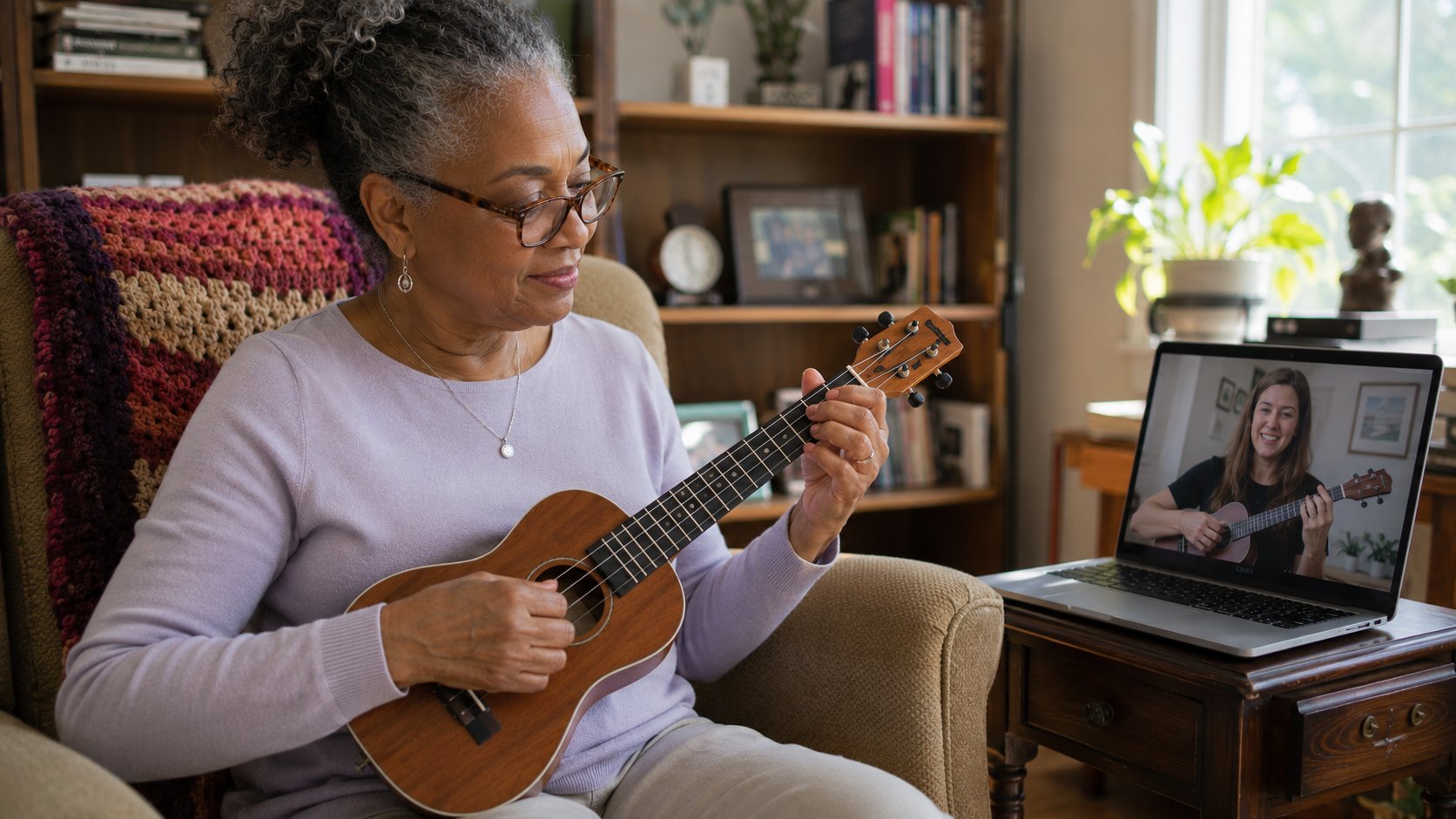
Music Lessons for Seniors: It’s Genuinely Not Too Late to Start
The idea that music is something you have to start as a child to get good at is one of the most stubborn myths in adult learning. The research doesn’t support it. Older adults (including those in their seventies and beyond) can and do learn instruments to a satisfying level, gain measurable cognitive benefits, and report some of the deepest enjoyment of any age group of music students.
If you’ve been thinking about starting music lessons “someday,” here’s an honest look at why someday should probably be now.
What the Research Actually Shows
Several decades of studies have looked at older adults learning music for the first time. The pattern is consistent: brain plasticity for music learning remains active throughout life. Older students learn somewhat differently than children (usually with more conceptual understanding and less rote repetition) but they make real progress with real practice.
Documented benefits for older adult music learners include:
- Improved working memory and processing speed.
- Better fine motor coordination, particularly in the hands.
- Reduced rates of cognitive decline.
- Mood improvements, including reduced anxiety and depression symptoms.
- Strengthened social connections through ensemble playing or group classes.
- A sustained sense of growth and accomplishment, which matters enormously for wellbeing.
These aren’t small effects. Music learning in older adulthood is one of the most evidence-supported activities for maintaining cognitive and emotional health.
Best Instruments for Older Adult Beginners
Several instruments are particularly well-suited to older adults starting out.
Piano. No physical demand beyond pressing keys, immediate sound feedback, visible logic (one key per note), and a vast repertoire at every difficulty level. The most common starting instrument for older adults, and for good reason.
Voice. Free, always available, and uniquely intimate. Voice does require some physical stamina, but it can be paced gently for any age. Many older adults find singing emotionally rewarding in a way no other instrument matches.
Ukulele. Light, portable, forgiving on the fingers, immediately satisfying. A wonderful choice for adults whose hands are less strong or flexible than they once were.
Classical guitar. Nylon strings are gentler on the fingers than steel. Sitting posture is comfortable. The repertoire is rich and rewarding.
Recorder. Often dismissed, but a genuinely lovely instrument for older beginners. Cheap, easy to make sound on, with a beautiful repertoire from early music.
A few instruments to think twice about for older first-time beginners: violin (steep learning curve early on), saxophone (breath demands), drum kit (physical intensity). Not impossible, but harder starting points if you’re working with limited time.
What to Expect in Your First Year
Older adult learners often progress differently than they expect. The early phase tends to be quicker because adults understand instructions, can self-direct practice, and can articulate what they’re trying to do. The later phase can be slower because motor learning consolidates a bit more gradually than in childhood.
The net result: most older adult beginners can play simple, recognizable music within the first three months, and play meaningful pieces by the end of the first year.
What helps most:
- A teacher who genuinely respects adult learners and doesn’t talk down to you.
- Realistic practice expectations: 15-20 minutes a day, every day, beats long weekend sessions.
- A clear goal (a song to learn, a piece to play for a grandchild, a Christmas hymn for family) that gives the work meaning.
What Doesn’t Help
A few patterns that consistently make things harder for older adult beginners:
- Comparing yourself to children or younger adults. Your timeline is your timeline.
- Pushing through pain. Hand pain is a signal to back off, not power through.
- Long gaps between practice sessions. The neurological consolidation that builds skill happens with frequent contact.
- Expecting concert-level results from casual practice. Adjust expectations to your time investment.
The Real Reason to Start
Beyond the cognitive research and the technical possibilities, here’s the actual case for older adults starting music: it’s deeply enjoyable. People who start in their sixties and seventies often describe music lessons as one of the most rewarding things they’ve done: not because they became performers, but because the work itself is so absorbing.
There’s something specifically valuable about taking on a long-term skill in later life. It’s a project that pays back in small daily increments, builds something real over years, and connects you to a tradition that stretches back centuries. Few things in adult life offer that combination.
How to Find a Senior-Friendly Teacher on Tunelark
Many Tunelark teachers love working with older adult beginners and adapt their approach accordingly. To find your match:
1. Browse our teachers and filter by your chosen instrument.
2. Read bios. Look for teachers who mention working with adult beginners, and who write in a tone that feels respectful, not condescending.
3. Book a trial lesson with one whose profile resonates.
4. After the trial, ask yourself: did the teacher seem genuinely interested in you and your goals, not just delivering a curriculum?
It’s not too late. It hasn’t been too late since the research started looking at this question. The best time to start music lessons is whenever you decide you’re ready, and that can be at any age.
How to Find a Music Teacher on Tunelark
Every music teacher on Tunelark is vetted for credentials, teaching experience, and ability to teach effectively online. Our roster covers every common instrument plus voice, with teachers across classical, jazz, pop, contemporary, and beyond.
To find your match:
1. Browse our music teachers and filter by instrument, style, or student age.
2. Read bios carefully. Look for teachers whose described approach matches your goals.
3. Book a trial lesson with two or three teachers whose profiles resonate.
4. After each trial, notice: did the teacher feel curious about you and clear about what they’d work on next? Both signals matter more than credentials.
The best music teacher for you isn’t the most credentialed or the most popular. It’s the one whose teaching style and personality fit how you learn. Tunelark makes that match easier to find.
Frequently Asked Questions
Am I too old to really learn an instrument?
No. Adults in their seventies and eighties regularly start instruments and reach satisfying playing levels. The brain remains plastic for music learning at every age, and the cognitive benefits are well-documented.
Will arthritis or hand stiffness prevent me from learning?
Not necessarily. Many older adults with arthritis play music with adapted technique. A good teacher can adjust hand position, repertoire choices, and practice pacing to work with your body. Talk to your teacher about any physical limitations early on.
Will it really help my cognitive health?
Research strongly suggests yes. Music learning engages multiple cognitive systems (memory, attention, fine motor control, auditory processing) in ways that few other activities match. Several long-term studies have linked active music learning to reduced cognitive decline in older adults.
What if I tried lessons as a kid and quit?
You’re not the person you were as a kid, and the lessons available now are dramatically different. Many older adults who quit as children find they love the same instrument as adults because the teaching approach and their own motivation are both different.
How much should I practice as an older beginner?
15-20 minutes a day, five to seven days a week, is plenty for steady progress. Consistency matters far more than duration. Short, daily practice will produce far better results than occasional long sessions.
Keep reading
About Jennifer Heath
I'm Jennifer Heath, VP at Tunelark and a lifelong singer. I joined the company in 2020 and oversee much of what makes Tunelark work for our students and our teachers. That includes hiring, training, and supporting our instructors, customer and student support, marketing, and the day-to-day operations of the business.
I started voice lessons at age 7, sang with professional choirs that toured internationally through my teens, and performed solo at competitions and community events across Texas before stepping away in my twenties to study other interests, including business management. I haven't performed professionally in years, but I'll happily take the microphone at a karaoke night. Music has been in me every day of my life. Being able to spend the last six years working inside an online music education company, while traveling the world full-time, has been a perfect fit.
I believe deeply that music belongs in every life. For the self-expression, the discipline, the comfort, and the simple joy of it.
The Tunelark blog is where we share what we've learned about online music lessons: how to choose an instrument and a teacher, what to expect from your first lesson, how the major platforms compare, and how to keep music going through the busier seasons of life. Practical, honest writing you can act on.
Who we are
Tunelark provides virtual 1-on-1 music lessons to learners
of all ages.
We remove the barrier of geography and connect learners and teachers — wherever they are. Our growing community of vetted, experienced music educators have expertise in a wide variety of instruments, genres, and skill levels. We are passionate about connecting each student with the perfect instructor.

