
Best Age to Start Saxophone Lessons for Kids: A Parent’s Guide
Best Age to Start Saxophone Lessons for Kids: A Parent’s Guide
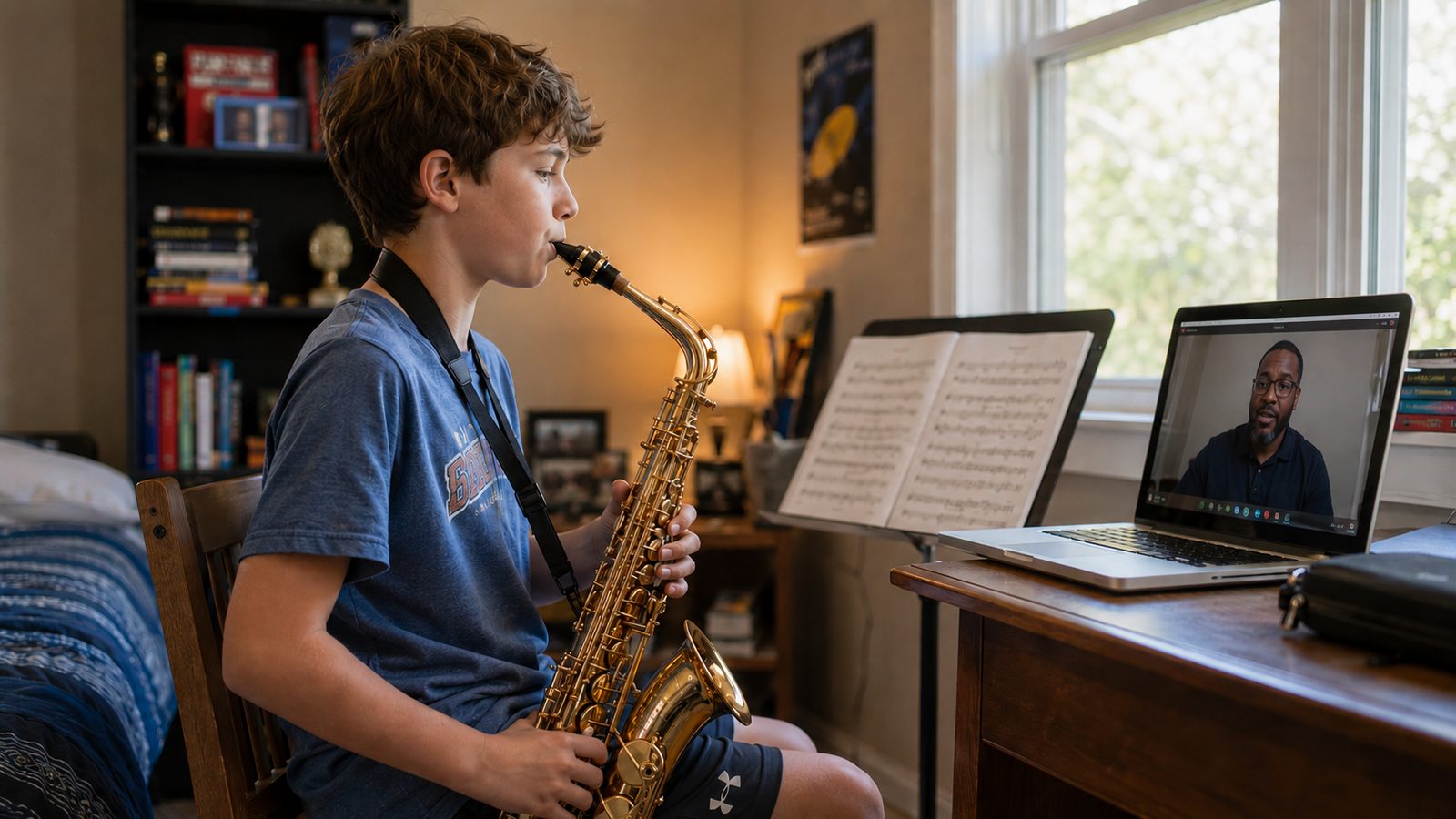
Saxophone is one of the most popular instruments for kids, partly because of school band programs, partly because of the instrument’s cool factor, and partly because once a kid produces their first sax tone, they tend to fall in love. But saxophone has more physical prerequisites than most beginning instruments, and parents asking about the best age to start saxophone for kids deserve a clear answer.
The short version: most teachers recommend ages 8 to 10 as the practical starting window. Below that, the instrument tends to fight back. Above that, students can start any time and progress quickly. Here’s the longer version.
Why Age Matters for Saxophone Specifically
For some instruments, age is mostly about attention span and motivation. For saxophone, the constraints are physical.
A beginner saxophone (even the smallest alto) is around two and a half pounds and worn on a neck strap. Reaching all the keys requires fingers that can stretch across the body of the instrument. Producing a tone requires lung capacity and a developed enough embouchure (the shape and strength of the mouth muscles around the mouthpiece). And here’s the one parents rarely hear: saxophone embouchure works best with the front adult teeth in place, because the upper teeth rest directly on the top of the mouthpiece.
These four constraints (weight, hand stretch, lung capacity, adult teeth) together create a real physical floor for saxophone learning. None of them are insurmountable in younger kids, but they make the early going much harder than it needs to be.
For broader context on starting ages across instruments, our guide to what age to start music lessons covers the bigger picture.
Ages 7 to 9: The Earliest Window
This is the youngest practical window for saxophone, and it works for some kids but not most. Things to look for if you’re considering starting at this age:
- Has the child lost their front baby teeth and grown in their adult upper incisors? This matters more than parents usually realize.
- Can they comfortably hold a two-and-a-half-pound instrument for ten to fifteen minutes at a time?
- Can their fingers reach the lower keys without strain?
- Do they have the attention span for daily ten-minute practice sessions?
If the answers are yes, a kid in the 7-9 range can absolutely start sax. If any are no, waiting six to twelve months will make the early experience dramatically better. Frustration in the first three months is the most common reason young saxophone students quit, and almost all of it traces back to a too-early start.
For a related read, our guide on whether your child is ready for music lessons covers the readiness signals that apply across instruments.
Ages 10 to 12: The Sweet Spot
For most kids, this is the ideal window to start saxophone. Several reasons converge:
- The physical prerequisites (hand size, lung capacity, dental development) are almost always in place.
- Many school band programs start in fifth or sixth grade, which means there’s social momentum around playing an instrument and a built-in ensemble experience that motivates daily practice.
- Cognitive readiness for music reading, counting, and self-directed practice is well established.
- Kids this age can usually handle the patience and repetition the instrument requires.
Starting in this window also means a child who continues will have a meaningful musical foundation by high school, which opens up jazz band, concert band, marching band, and audition opportunities at exactly the right time.
Ages 13 and Up: Teens and Beyond
A common worry parents have is that starting saxophone at 13 or 14 is “too late.” It isn’t. Teenagers often progress faster than younger beginners because they can practice independently, follow more sophisticated instructions, and articulate musical goals.
The main consideration for older starters is motivation. A teenager who chose saxophone themselves and is excited about it will progress quickly. A teenager who was pushed into it often won’t. The instrument doesn’t care about the age. It cares about practice hours and consistent attention. Both are easier to come by when the student genuinely wants to be there.
What to Look For in a Kid-Friendly Sax Teacher
The right teacher matters more for young saxophone students than for almost any other group, because so many early habits stick. A few traits to look for:
- Experience working with the specific age range of your child. A teacher who specializes in adult students might be wonderful but not the right fit for a nine-year-old.
- A focus on tone production and posture from the very first lesson. Bad habits set in the first three months are very hard to undo later.
- The ability to keep practice fun without losing structure. Both matter, and the balance is a real skill.
- Communication with parents about what to listen for between lessons.
Our guide on what to look for in a children’s music teacher covers this in more depth, and our online saxophone lessons guide covers the practical side of online instruction specifically.
How to Find a Saxophone Teacher on Tunelark
Many Tunelark teachers specialize in kid and teen saxophone students. Here’s how to find one who’s right for your child.
1. Browse our teachers and filter by your chosen instrument.
2. Read bios. Look for teachers who explicitly mention working with kids in your child’s age range.
3. Book a trial lesson with one whose profile resonates.
4. Watch the trial together and notice whether your child seemed engaged, comfortable, and curious. Those are the signals that matter most.
The best age to start saxophone for kids is the age when the physical prerequisites are met and the child wants to play. For most kids, that lands somewhere in the 10-12 range, but the right age is the one that fits your specific child.
Frequently Asked Questions
Can my 7-year-old start saxophone?
Sometimes, but it depends on physical readiness: particularly hand size and whether the adult front teeth have come in. Many 7-year-olds find saxophone physically frustrating and would have a much better experience starting on piano or recorder for a year, then switching to saxophone.
Should my child start on alto or tenor?
Alto, almost always. Alto is smaller, lighter, easier to produce a tone on, and the standard starting instrument for beginning saxophone students of any age. Tenor and other sizes can come later.
Is saxophone a good first instrument for kids?
It can be, but it’s not the easiest first instrument. Piano and recorder are typically gentler starting points, and many kids do well starting on one of those at age 6 or 7 and switching to saxophone at age 10. That said, plenty of kids start directly on saxophone at age 10 and do beautifully.
Will school band cover lessons too?
School band typically provides group instruction, which is wonderful for ensemble experience but rarely enough for serious individual progress. Most kids who excel in school band also take private lessons (usually 30 minutes a week) for the individual attention the band setting can’t provide.
How long should kids practice saxophone?
Beginners should practice 10 to 15 minutes a day, five to seven days a week. After six months, that grows to 20 to 30 minutes. Consistency matters far more than duration. Daily short sessions produce dramatically better results than occasional long ones.
Looking for an online saxophone teacher? See our full Online Saxophone Lessons page for everything you need to know about getting started.
Keep reading
About Jennifer Heath
I'm Jennifer Heath, VP at Tunelark and a lifelong singer. I joined the company in 2020 and oversee much of what makes Tunelark work for our students and our teachers. That includes hiring, training, and supporting our instructors, customer and student support, marketing, and the day-to-day operations of the business.
I started voice lessons at age 7, sang with professional choirs that toured internationally through my teens, and performed solo at competitions and community events across Texas before stepping away in my twenties to study other interests, including business management. I haven't performed professionally in years, but I'll happily take the microphone at a karaoke night. Music has been in me every day of my life. Being able to spend the last six years working inside an online music education company, while traveling the world full-time, has been a perfect fit.
I believe deeply that music belongs in every life. For the self-expression, the discipline, the comfort, and the simple joy of it.
The Tunelark blog is where we share what we've learned about online music lessons: how to choose an instrument and a teacher, what to expect from your first lesson, how the major platforms compare, and how to keep music going through the busier seasons of life. Practical, honest writing you can act on.
Who we are
Tunelark provides virtual 1-on-1 music lessons to learners
of all ages.
We remove the barrier of geography and connect learners and teachers — wherever they are. Our growing community of vetted, experienced music educators have expertise in a wide variety of instruments, genres, and skill levels. We are passionate about connecting each student with the perfect instructor.

