
Beginner Violin Tips: What Every New String Player Should Know
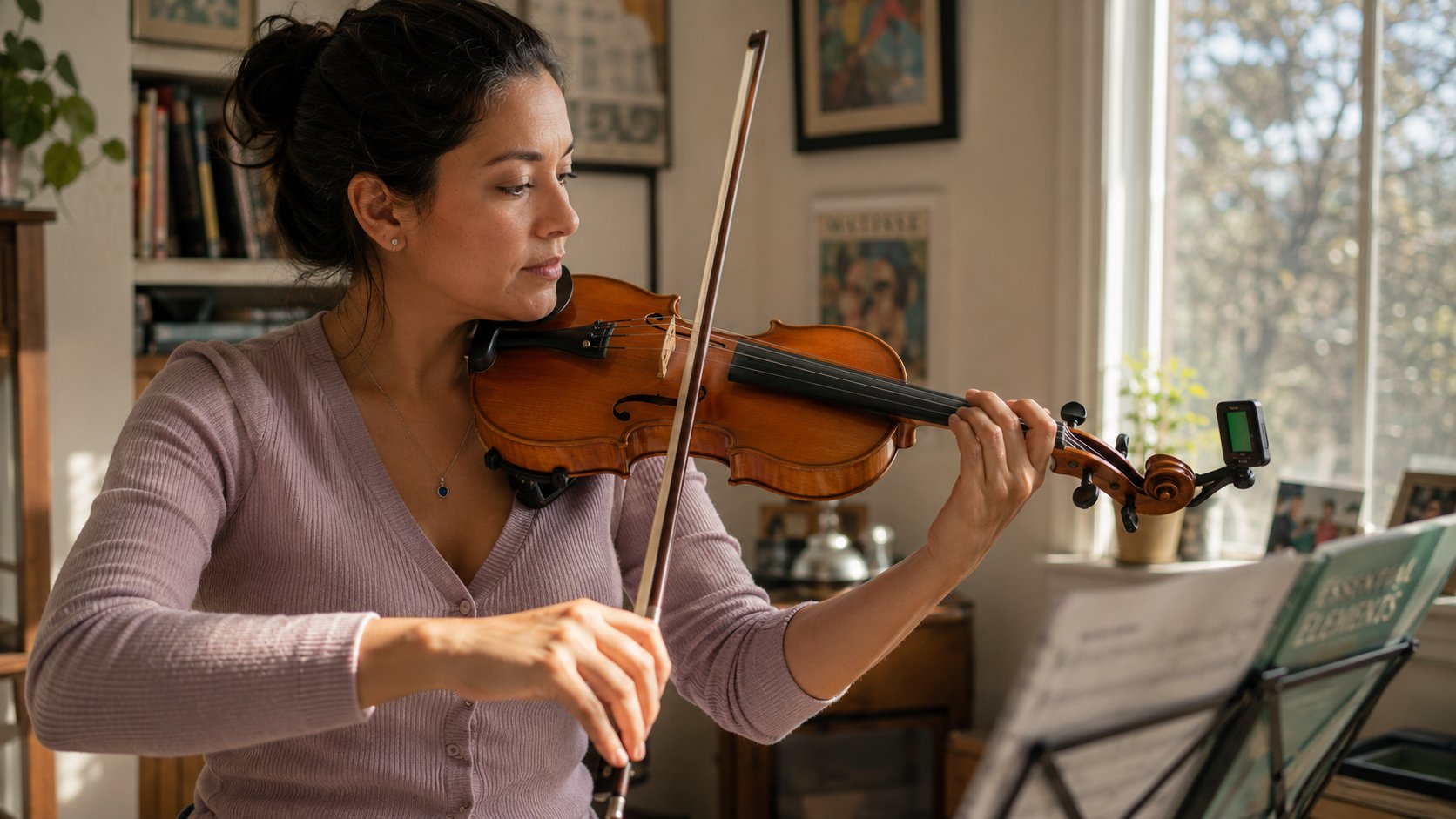
Beginner Violin Tips: What Every New String Player Should Know
Violin has a reputation as one of the hardest instruments to start. Some of that is earned (the early months are genuinely demanding) but a lot of it comes from beginners learning bad habits from random internet videos. Approached the right way, with the right teacher, violin is achievable for nearly any adult or child willing to put in consistent, patient work.
Here’s what every new violin player should know before they start, and the early habits that make all the difference.
Set Up the Instrument Properly Before You Play
Most beginner violin frustration traces back to poor setup. A few things to address before you even play your first note:
Shoulder rest fit. The shoulder rest holds the violin in place under your jaw without your left hand. If it doesn’t fit your neck and shoulder properly, you’ll spend years compensating with tension. Brands like Kun, Wolf, and Bonmusica have different shapes, try a few in person at a string shop if possible.
Chin rest fit. Same logic. The standard chin rest doesn’t fit every face. A good string shop will let you try different shapes.
Bow rehair if used. If you bought a used or rental violin, get the bow rehaired ($60-$80) if it hasn’t been done recently. Old, glazed bow hair fights you constantly.
Strings. Cheap factory-installed strings sound bad. Replacing them with mid-range strings (Dominant, Tonica, Pirastro Tonica: $40-$80 set) transforms the instrument’s response.
These small setup issues are the most common source of beginner discouragement. Solving them up front saves months.
Posture Matters More Than You Think
The way you hold the violin determines what’s possible technically. Two habits to develop from day one:
Stand or sit tall, with weight balanced. Slumping or leaning to one side creates compensating tensions everywhere else.
Left arm under the violin, not gripping it. The violin should rest on the collarbone, supported by the shoulder rest. The left hand is free to play, not hold the instrument up.
A good teacher catches posture issues in the first lesson. Self-taught beginners often spend years working around posture problems that could have been fixed in week one.
Bow Hold Comes First
The most universally agreed-upon priority for beginning violin students is bow hold. Before any real playing begins, your teacher will spend serious time on:
- The right thumb’s bent position on the frog.
- The middle finger curving around the stick.
- The pinky balanced on top (not gripping).
- The index finger contacting the stick at the first knuckle.
This sounds fussy because it is. A poor bow hold limits everything: tone, dynamics, expressive range. A good bow hold from the start makes everything else easier.
Expect Six Months of Rough Tone
The honest truth: even with great instruction and consistent practice, violin tone takes about six months to become consistently pleasant. Squeaks, scratches, and uneven sound are normal during this phase. They’re not signs of failure. They’re signs your muscles are still learning what good tone requires.
Push through this phase. Students who quit during this window almost always do so because they didn’t realize it was temporary. Students who stick with it for six months almost universally make it long-term.
Practice Habits That Pay Off
A few specific practices that compound over months and years:
Slow practice. Most beginner violin problems come from playing too fast before the muscle memory is reliable. Practicing slowly (much slower than performance speed) builds the cleanest technique.
Daily contact, even short. Twenty minutes a day, every day, beats two hours on Saturday. Vocal-fold-like muscle memory consolidates with frequent contact, not long sessions.
Recording yourself. Listen back to recordings of your practice. The gap between what you think you sound like and what you actually sound like is one of the most useful learning tools available.
Working on tone production alone for part of every session. Long bow strokes, open strings, scales: boring on paper, transformative for tone.
What to Avoid
A few patterns to skip:
- Buying a cheap violin from a non-specialist online retailer. Poorly set up violins make learning harder. Buy from a string shop or a reputable music store.
- Learning fingering from YouTube without a teacher. Self-taught violin almost always produces compensating habits that take longer to fix than to learn correctly the first time.
- Skipping warm-ups. Five minutes of open-string bowing before serious practice protects your tone and reduces injury risk.
- Practicing through pain. Hand, neck, or shoulder pain is a signal to stop and reassess setup with a teacher.
How to Find a Violin Teacher on Tunelark
Every Tunelark violin teacher is vetted for credentials, teaching experience, and the ability to teach effectively online. To get started:
1. Browse our violin teachers and filter for violin.
2. Read bios. Look for teachers who specifically mention working with beginners (not all do).
3. Book a trial lesson with one whose approach feels right.
4. After the trial, ask yourself: did the teacher address setup, posture, and bow hold with care? Those are the early markers of someone who’ll set you up for long-term success.
Violin rewards patience like few other instruments. The first six months are the hardest. Everything after that is the payoff.
Frequently Asked Questions
Can adults really learn violin?
Yes. Adult violin beginners can absolutely reach satisfying playing levels with consistent practice and good instruction. The early months are demanding, but adults often progress faster than children in the conceptual aspects.
How long before I sound good on violin?
About six months of consistent practice for tone to become consistently pleasant. About 18 months to two years for genuinely musical playing. The early phase is the steepest, and progress accelerates after foundation is set.
Do I need a real violin or can I learn on a cheap one?
A cheap violin will work against you in ways you won’t realize until later. Buy a properly set up instrument from a string shop, even at the entry level ($400-$800). The difference is enormous.
How often should I practice violin?
20-30 minutes a day, five to seven days a week. Less than that stretches every milestone. More than that doesn’t accelerate things as much as you’d expect. Consistency matters more than total hours.
Is violin harder than other instruments?
In the early months, yes: producing clean tone is harder than on most instruments. Long-term, all serious instruments require similar amounts of work. Violin’s steep entry phase is its main difficulty.
Looking for an online violin teacher? See our full Online Violin Lessons page for everything you need to know about getting started.
Keep reading
About Jennifer Heath
I'm Jennifer Heath, VP at Tunelark and a lifelong singer. I joined the company in 2020 and oversee much of what makes Tunelark work for our students and our teachers. That includes hiring, training, and supporting our instructors, customer and student support, marketing, and the day-to-day operations of the business.
I started voice lessons at age 7, sang with professional choirs that toured internationally through my teens, and performed solo at competitions and community events across Texas before stepping away in my twenties to study other interests, including business management. I haven't performed professionally in years, but I'll happily take the microphone at a karaoke night. Music has been in me every day of my life. Being able to spend the last six years working inside an online music education company, while traveling the world full-time, has been a perfect fit.
I believe deeply that music belongs in every life. For the self-expression, the discipline, the comfort, and the simple joy of it.
The Tunelark blog is where we share what we've learned about online music lessons: how to choose an instrument and a teacher, what to expect from your first lesson, how the major platforms compare, and how to keep music going through the busier seasons of life. Practical, honest writing you can act on.
Who we are
Tunelark provides virtual 1-on-1 music lessons to learners
of all ages.
We remove the barrier of geography and connect learners and teachers — wherever they are. Our growing community of vetted, experienced music educators have expertise in a wide variety of instruments, genres, and skill levels. We are passionate about connecting each student with the perfect instructor.

