
Singing Through Performance Anxiety: A Voice Teacher on Quieting the Inner Critic
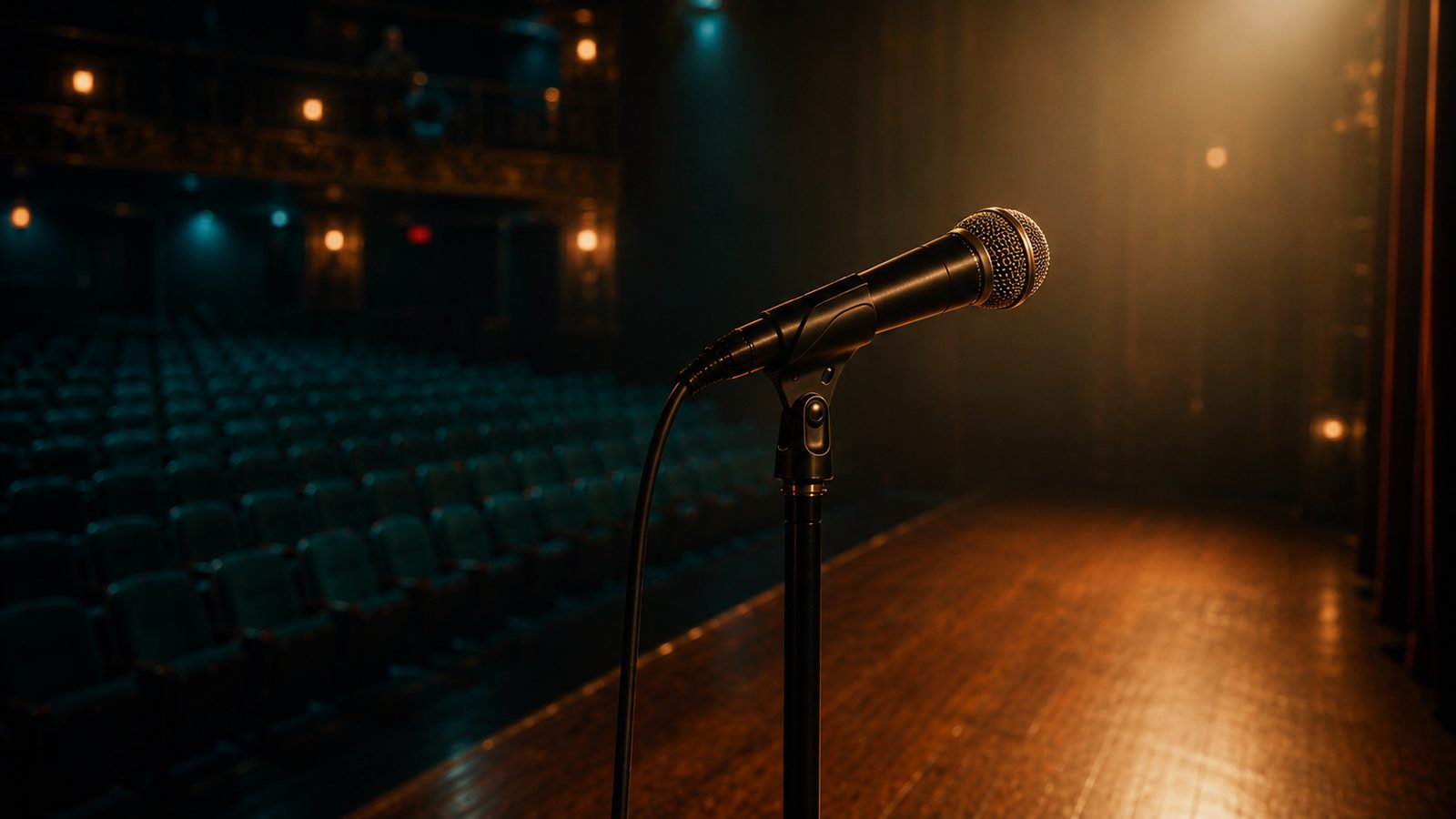
Performance anxiety is one of the most studied and most stubborn phenomena in the performing arts. Researchers have a clinical name for it, music performance anxiety, and surveys of professional musicians consistently find that the majority experience it to some degree, including players at the very top of their fields. It is not a beginner’s problem that goes away with experience. It is a near-universal feature of caring about how you sound in front of other people.
For singers, it carries an extra weight that instrumentalists are partly spared. A pianist can put their hands on the keys; a guitarist has six strings between themselves and the room. A singer has nothing to hold. The instrument is the body itself: the breath, the throat, the face. And so the fear of being judged on your singing can feel indistinguishable from the fear of being judged as a person. That intimacy is exactly what makes singing so moving to listen to, and exactly what makes the nerves so personal. It’s a more intense version of the stage fright almost every performer knows.
Alawna M., a voice teacher at Tunelark who holds a BFA in musical theatre, has spent years working at that intersection. What’s striking about her approach is that it doesn’t aim at the goal most anxious performers wish for: the absence of nerves. Instead, it aims at something more durable, changing a singer’s relationship to the fear so they can perform with it present. Her methods, drawn from real students and real performances, line up remarkably well with what performance psychology has learned about why we falter under pressure and what actually helps.
The inner critic, and why self-monitoring backfires
Ask Alawna about performance anxiety and she doesn’t begin with breathing drills or stagecraft. She begins with the mind, and specifically with the voice in a singer’s head that narrates every imperfection in real time.
She describes a former student whose nerves took the form of perfectionism, “or the ‘inner self critic,'” as Alawna puts it. In lessons she gave it a simpler name the student could work with: a “mind block.” The behavior was textbook, and anyone who has watched a capable person unravel will recognize it. “Usually, this student would sing through a song, and repetitively stop and correct themselves, even if I personally thought they were excelling,” Alawna recalls. The talent was not in question. The interruptions were.
There’s a well-documented mechanism underneath this. When a performer’s attention turns inward and starts monitoring each individual movement (was that note flat, is my tone thin, did I breathe in the right place), skills that are normally fluent and automatic can become halting and effortful. Psychologists who study choking under pressure describe it as a kind of paralysis-by-analysis: the conscious mind interferes with a process the body already knows how to run. The inner critic isn’t just unpleasant. It actively degrades the very performance it’s trying to protect.
Alawna’s intervention with that student is a small masterclass in interrupting the loop. Mid-performance, as the student began correcting herself yet again, Alawna stopped her and asked a question instead of offering reassurance: “When you correct yourself, who’s rules are you following, and how do you know if those rules are correct or not?”
The student paused. “I don’t know,” she admitted. “I think they are my rules I create in my head.”
That admission contained the whole breakthrough. The standard the student kept failing wasn’t external, objective, or even real. It was a private rulebook she had authored herself and then forgotten she’d written. By asking whose rules, Alawna helped the student step outside the critic and look at it, rather than obey it. In cognitive terms, she created distance between the singer and the anxious thought, which is precisely what loosens its grip. Naming the phenomenon a “mind block” does the same work: it reframes the critic as a thing that is happening, not as the truth about one’s ability.
Then Alawna offered something a perfectionist almost never gives themselves: permission. “Do we truly need rules to sing?” she asked. “Or can we just be in the present moment? We can even make mistakes! We can even let go.”
For someone who has organized their singing around not slipping up, that invitation can be disorienting and liberating in equal measure. The lesson, as Alawna describes it, helped the student understand “that ‘flawless’ performances simply don’t exist, and that live singing calls for raw, unedited, and authentic vocals.” In asking for raw, unedited, and authentic singing, Alawna isn’t lowering the standard. She’s replacing a brittle one, flawlessness, with a richer and more honest one, presence. The goal is not a performance scrubbed of every imperfection. It’s a performance that’s alive and unmistakably the singer’s own.
Rehearsing the fear, not just the song
The second pillar of Alawna’s approach moves from the mental to the deeply practical, and it maps onto one of the most reliable findings in anxiety research: we fear most what we haven’t yet faced, and familiarity is the antidote.
In the lessons leading up to a performance or audition, Alawna doesn’t only rehearse the material. She rehearses the event. “We primarily focus training and calming the anxiety around the anticipated event through mock auditions,” she explains. “This practice essentially helps students understand what the audition process will be like by staging an audition experience in a lesson.”
This is, in effect, exposure training: the same principle clinicians use to help people grow comfortable with situations that frighten them, delivered in graduated, survivable doses. The first time a singer feels their heart pounding, their breath going shallow, and their thoughts scattering should not be in the moment that counts. Anxiety thrives on novelty and the unknown, so by simulating the walk-in, the introduction, the wait, and the performance inside the safety of a lesson, Alawna lets students meet those sensations in advance, when nothing is at stake. It’s the same logic behind a thorough plan to prepare for a recital: rehearse the circumstances, not just the notes.
Crucially, she has students pay attention to their internal state while it’s happening. The mock audition, she says, “makes the student more aware of how they are breathing, what they are thinking, and a sense of how prepared they feel before the real thing.” That self-awareness, noticing the racing heart and recognizing it as ordinary pre-performance arousal rather than a sign of impending failure, is what allows a singer to respond rather than spiral. A body sensation you’ve felt before and labeled correctly is far less frightening than one that ambushes you.
But Alawna pairs the practical rehearsal with a reframe of the audition itself, and this is where she addresses the deepest root of the fear. So much performance anxiety comes from loading a single moment with our entire sense of worth, treating one audition as a verdict on whether we belong. She redirects that. “I also invite students to think of auditions as more of a learning experience than a ‘I need to be cast’ mindset.”
Performance psychologists draw a sharp line between outcome goals, like being cast, winning the part, or impressing the panel, and process goals, like singing a phrase with an open throat, staying connected to the lyric, or breathing low. Outcome goals are largely outside the performer’s control, since a casting decision belongs to other people, and fixating on them tends to spike anxiety precisely when focus is most needed. Process goals are entirely controllable and pull attention toward the task rather than the threat. By steering students toward auditions as learning experiences, Alawna is moving them onto the ground they can actually stand on.
And then there’s the philosophy she returns to, the one that quietly releases the outcome no singer can fully command: “If something is meant for you, it will not pass you by.” A student who walks into an audition trying to learn something has already succeeded before the first note. A student who walks in needing to be cast has staked everything on a decision that was never theirs to make.
The last thing she says before they walk out
For all the preparation that goes into managing nerves, there’s still the breath right before a singer steps out. What a teacher says in that instant matters enormously, because it’s the thought the student carries onstage. Alawna’s go-to does three distinct jobs at once: “You’ve worked hard training months for this exact moment today. This performance is a reward, not a test. Let go, be in the moment, and have fun!”
That short send-off has a deliberate architecture. It opens by reminding the student of the work already behind them: the months of preparation no nervous flutter can erase. This is a direct deposit into what psychologists call self-efficacy, the belief in one’s own capability, which is one of the strongest buffers against performance anxiety and is built largely from evidence of past effort and mastery.
Then comes the pivot that does the heaviest lifting: a reward, not a test. This is cognitive reappraisal in a single phrase. A test is something you can fail, and the body braces accordingly. A reward is something you get to enjoy. Notably, the physical signatures of anxiety and excitement are nearly identical: racing heart, quickened breath, heightened energy. A growing body of research suggests that reinterpreting those sensations as excitement, rather than trying to suppress them into calm, leads to better performance. Telling a singer the moment is a reward gives their pounding heart a new and friendlier story.
Finally, the send-off ends with three clear, actionable instructions for the next few minutes: let go, be present, have fun. Each one redirects attention away from self-monitoring and toward the music and the moment, the antidote to the very paralysis-by-analysis that fuels the inner critic. It is, in one sentence, the whole of Alawna’s philosophy, handed to a student exactly when they need it most.
Putting it to work in your own singing
Taken together, Alawna’s approach offers a usable framework for any singer who tightens up the moment they have to perform. The throughline is that none of it is about eliminating the nerves. The aim is a working relationship with the fear.
Start with the inner critic. When you catch yourself stopping, correcting, and restarting, ask Alawna’s question of yourself: whose rules am I following, and how do I know they’re even correct? Naming the pattern (“that’s my mind block”) turns the critic from a verdict into a passing event you can notice and set down.
Then rehearse the circumstances, not just the song. Before the performance that counts, run a full dress rehearsal of the situation: do your vocal warm-ups, stand up, introduce yourself out loud, sing start to finish without stopping, and watch how your breath and thoughts behave under that mild pressure. Meeting the sensations early strips them of their power to surprise you.
And in the final moment, give yourself the send-off Alawna gives her students. Anchor to the preparation you’ve already done. Reframe the event as a reward rather than a test. Let the energy in your body be excitement instead of dread. Then put your attention where it belongs: the music, the lyric, the present moment. Let the rest go.
Frequently Asked Questions
Why do I get so nervous singing in front of people?
Singing exposes something personal, so nerves are extremely common, even among experienced performers. Performance anxiety is a normal response rather than a sign that you are not ready.
How can I overcome stage fright when singing?
Preparation, gradual exposure, and breath control all help. Performing for one trusted person, then small groups, builds confidence far more reliably than waiting until you feel completely fearless.
Does performance anxiety ever fully go away?
For most singers it becomes manageable rather than disappearing entirely. With experience the nerves shrink, and you learn to sing well even while feeling some adrenaline.
What can I do in the moment when nerves hit before I sing?
Slow your breathing, release tension in your shoulders and jaw, and put your attention on the music rather than on the audience. Returning to a song you know well can help settle your nerves.
Can a voice teacher help with performance anxiety?
Yes. A good teacher creates a safe space to practice performing, builds your technical confidence, and gives you tools to manage nerves so they do not run the show.
About Alawna
Alawna’s path to a life in music began with a small act of avoidance. “I joined the choir in the 4th grade (at first to get out of math class) and soon found my love for singing,” she says. That accidental detour became a vocation. She pursued musical theatre through high school and went on to earn a BFA in the field.
She brings a performer’s ear into the studio, especially through her favorite material to teach: a unit on pop and rock technique built around “riffing, running, vocal flips, etc. to help truly color a song and make it excitingly unique for a student.” It’s a fitting specialty for a teacher so committed to helping singers sound like themselves rather than like anyone else.
What keeps the work meaningful, she says, is that she’s never finished learning. “The most valuable skills I have are from what my students have taught me. Sometimes I feel my students know me better than I know myself! I am extremely lucky to be not only a teacher, but a forever student myself.” Years of teaching have also taught her there’s no single formula: “Every student has a unique profile and learning style, which makes teaching that much more exciting.”
Ready to perform without the inner critic running the show?
If you’ve ever stopped yourself mid-song because of a rulebook only you can hear, or felt your nerves take over the moment the stakes got real, Alawna’s approach offers a way forward, one that treats performance anxiety as something to move through rather than a verdict on whether you belong onstage. She helps singers quiet the inner critic, rehearse the pressure before it counts, and step into each performance as a reward rather than a test. Alawna is currently accepting new students at Tunelark, and works with singers at every stage who want to perform with more freedom and less fear.
Looking for an online voice teacher? See our full Online Voice Lessons page for everything you need to know about getting started.
Keep reading
About Jennifer Heath
I'm Jennifer Heath, VP at Tunelark and a lifelong singer. I joined the company in 2020 and oversee much of what makes Tunelark work for our students and our teachers. That includes hiring, training, and supporting our instructors, customer and student support, marketing, and the day-to-day operations of the business.
I started voice lessons at age 7, sang with professional choirs that toured internationally through my teens, and performed solo at competitions and community events across Texas before stepping away in my twenties to study other interests, including business management. I haven't performed professionally in years, but I'll happily take the microphone at a karaoke night. Music has been in me every day of my life. Being able to spend the last six years working inside an online music education company, while traveling the world full-time, has been a perfect fit.
I believe deeply that music belongs in every life. For the self-expression, the discipline, the comfort, and the simple joy of it.
The Tunelark blog is where we share what we've learned about online music lessons: how to choose an instrument and a teacher, what to expect from your first lesson, how the major platforms compare, and how to keep music going through the busier seasons of life. Practical, honest writing you can act on.
Who we are
Tunelark provides virtual 1-on-1 music lessons to learners
of all ages.
We remove the barrier of geography and connect learners and teachers — wherever they are. Our growing community of vetted, experienced music educators have expertise in a wide variety of instruments, genres, and skill levels. We are passionate about connecting each student with the perfect instructor.

