
Best Online Cello Lessons: Finding a Teacher Who Understands the Instrument
Best Online Cello Lessons: Finding a Teacher Who Understands the Instrument
Cello has one of the steepest early learning curves of any instrument, but few are more rewarding for students who stay with it. The right teacher is what makes that early phase navigable. Online cello lessons have opened up access to specialist teachers who, until recently, would only be found in major cities with conservatories.
Here’s what to know about online cello instruction and how to find a teacher who actually understands the cello, not just stringed instruments in general.
Why Online Cello Lessons Are Surprisingly Effective
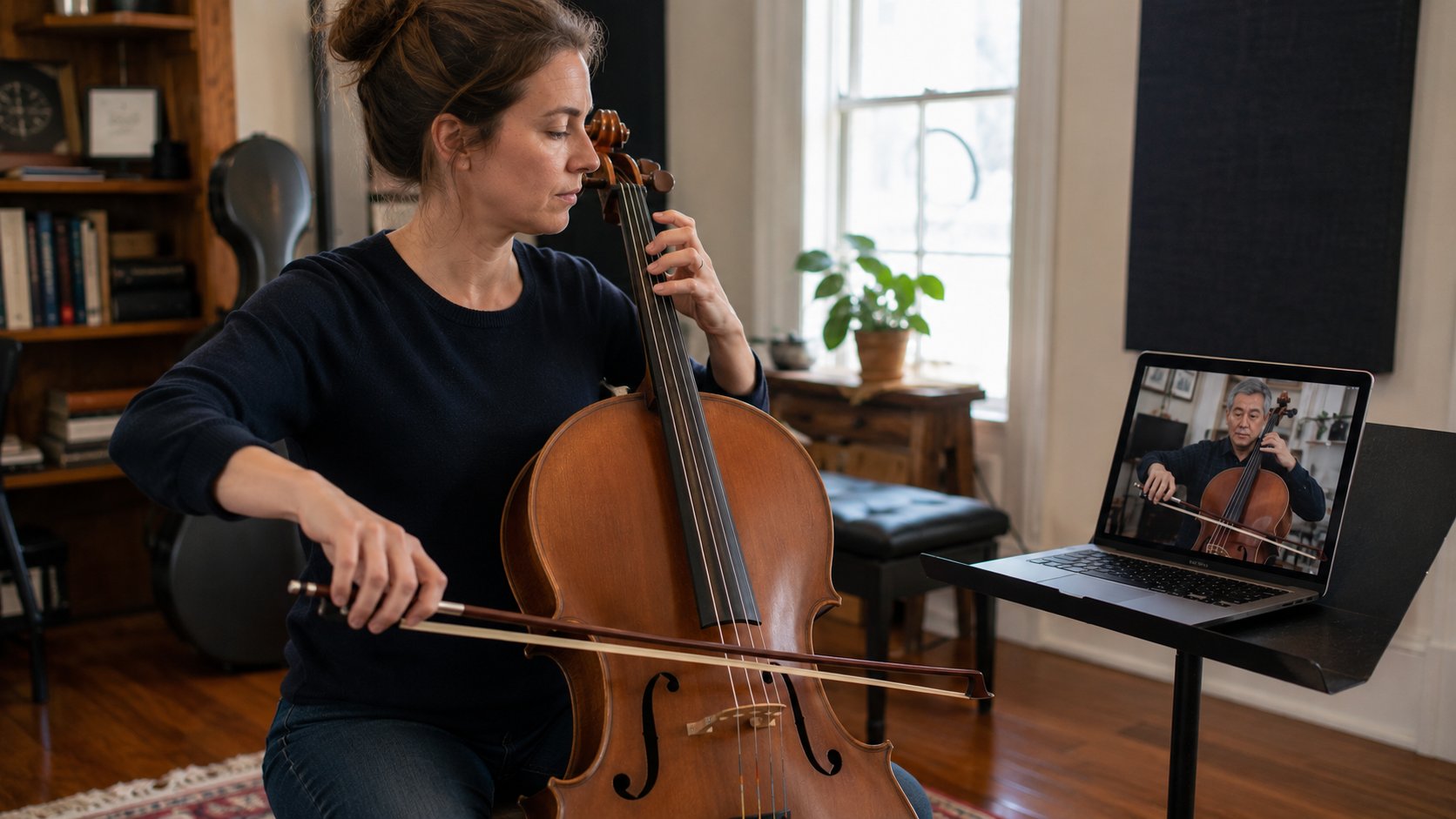
Cello is one of the instruments people most often assume can’t be taught remotely. In practice, modern online lessons handle it well. A webcam shows your bow arm, your left-hand position, your posture. Audio carries the tone clearly enough for a teacher to diagnose intonation and bow technique in real time. The only thing missing is playing physically alongside your teacher, which matters at advanced levels but is a much smaller factor for beginners and intermediate students than people imagine.
The advantage online: cello specialists are rare. The teacher who genuinely understands shifting, bow distribution, and cello tone production may not be in your city, but they’re almost certainly findable online.
What to Look For in a Cello Teacher
Three criteria matter more than the rest.
Specific cello pedagogy training. Cello has its own teaching tradition (Suzuki, Galamian-influenced, traditional European) that’s distinct from violin and viola pedagogy. Look for teachers who articulate which approach they use and why. “I teach all strings” is a yellow flag at intermediate and advanced levels.
Comfort working with adult beginners (if that’s you). Adult cello beginners need different repertoire choices and physical adaptations than children. A teacher who specializes in conservatory-track kids may not be a great fit.
Patience with the early phase. Cello produces ugly sounds for the first few months no matter who’s teaching. A good cello teacher reframes that as normal, gives you small wins to keep you motivated, and protects your relationship with the instrument while your technique catches up.
Equipment You Need
A cello. Rental is the typical starting point ($30-$80/month from a local string shop). Buying a beginner cello runs $700-$2000 for something genuinely playable. Avoid extremely cheap online cellos. They’re almost never properly set up and can make learning harder than necessary.
A bow. Usually comes with a rental or starter package. Carbon fiber bows ($200-$600) are popular alternatives to wood for student players.
Rosin, end-pin holder, music stand, tuner. Essential accessories, all available for under $100 combined.
For online lessons specifically: a webcam positioned to show your bow arm and left hand (a tripod and external webcam help significantly), and a quiet, acoustically forgiving room.
What to Expect by Level
Absolute beginner (months 0-6). Cello posture and hold, bow grip, open strings, first finger placements, simple melodies in first position. The early phase is mostly about producing tone, getting a sound that isn’t scratchy or squeaky. A good teacher protects your morale here.
Early intermediate (months 6-18). All four fingers in first position, basic shifting to upper positions, vibrato introduction, simple Suzuki-method or Bach-style pieces. You start to sound like a cellist.
Intermediate (year 2-4). Multiple positions comfortably, more advanced bow techniques (spiccato, sautillé, staccato), real repertoire from the Bach cello suites or accessible concerti, chamber music if available.
Advanced (year 4+). Mature technique, expressive control, serious repertoire. Most serious adult students never reach this phase, and that’s fine. The intermediate plateau is musically rich enough to be deeply satisfying for life.
A Note on Practice Spaces
Cello is loud, louder than people expect. If you live in an apartment, talk to neighbors before you commit, or invest in a practice mute ($15-$30) for daily work. The mute changes the tone slightly but cuts the volume by about 70%, making practice possible in shared walls.
How to Find a Cello Teacher on Tunelark
Every Tunelark cello teacher is vetted for credentials, teaching experience, and the ability to teach effectively online. To get started:
1. Browse our cello teachers and filter for cello.
2. Read bios. Look for teachers who specifically describe cello pedagogy, not generic “all strings” framing.
3. Book a trial lesson with one whose approach resonates.
4. After the trial, ask yourself: did this teacher seem like a cellist’s cellist? The right teacher’s depth on the instrument shows quickly.
Cello is a long game. With a teacher who understands the instrument and the patience to navigate the early phase, the rewards are genuinely lifelong.
Frequently Asked Questions
Can adults really learn cello?
Yes. Adult cello beginners are increasingly common, and the instrument can be learned to a satisfying level at any age. The early phase requires more patience than for most instruments, but the rewards are commensurate.
Should I rent or buy a cello to start?
Rent for at least the first six months. Cellos vary enormously in setup and tone, and you’ll know much more about what fits you after some experience. Most teachers have rental shops they recommend.
How long before I sound good?
The honest answer is six to twelve months of consistent practice before tone becomes consistently pleasant. Earlier than that, expect rough patches. They’re normal and not a sign of poor aptitude.
Is cello harder than violin?
Different. Cello is more physically demanding (larger instrument, more weight to support) but more forgiving on intonation (larger spaces between notes). Both have steep early phases.
What if I have small hands?
Smaller cellos (7/8 or even 3/4 size) exist and may suit adult players with smaller frames. A good teacher will help you assess whether you’d benefit from a smaller instrument before you commit to a full-size cello.
Keep reading
About Jennifer Heath
I'm Jennifer Heath, VP at Tunelark and a lifelong singer. I joined the company in 2020 and oversee much of what makes Tunelark work for our students and our teachers. That includes hiring, training, and supporting our instructors, customer and student support, marketing, and the day-to-day operations of the business.
I started voice lessons at age 7, sang with professional choirs that toured internationally through my teens, and performed solo at competitions and community events across Texas before stepping away in my twenties to study other interests, including business management. I haven't performed professionally in years, but I'll happily take the microphone at a karaoke night. Music has been in me every day of my life. Being able to spend the last six years working inside an online music education company, while traveling the world full-time, has been a perfect fit.
I believe deeply that music belongs in every life. For the self-expression, the discipline, the comfort, and the simple joy of it.
The Tunelark blog is where we share what we've learned about online music lessons: how to choose an instrument and a teacher, what to expect from your first lesson, how the major platforms compare, and how to keep music going through the busier seasons of life. Practical, honest writing you can act on.
Who we are
Tunelark provides virtual 1-on-1 music lessons to learners
of all ages.
We remove the barrier of geography and connect learners and teachers — wherever they are. Our growing community of vetted, experienced music educators have expertise in a wide variety of instruments, genres, and skill levels. We are passionate about connecting each student with the perfect instructor.

