
Should You Record Your Singing Practice? A Beginner’s Guide
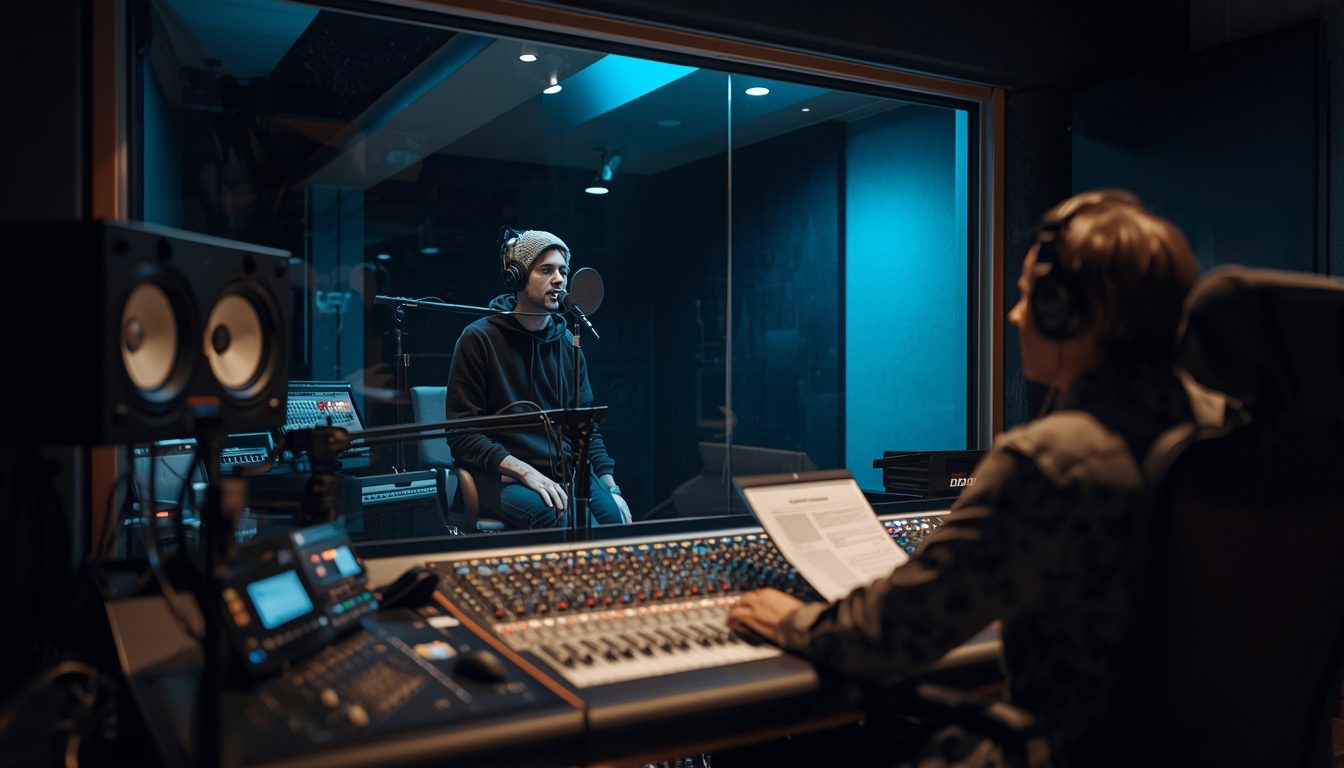
Should You Record Your Singing Practice? A Beginner’s Guide
If you’ve ever sung a phrase that felt great in the moment and then heard it back and winced, you’ve discovered the strange truth about voice: the singer’s experience of their own sound is not the audience’s experience. Bone conduction, room acoustics, and the natural protective tendencies of our ears all conspire to make us hear ourselves differently than anyone else hears us.
That gap is the main reason to record singing practice. It is also the reason recording can feel brutal at first. Here is how to use it without letting it derail you.
Why Recording Works (And Why It Stings)
Recording removes the gap between how you think you sound and how you actually sound. You hear the pitch drift you didn’t notice. The breath that ran out one phrase too early. The vowel that closed when it should have stayed open. The note you thought you held that you actually let collapse.
This is information you cannot get any other way. Your teacher catches some of it. Your own ear in the moment catches less of it than you think, because part of your attention is on producing the sound, not evaluating it. The recording is the audit.
The reason it stings is that we are not used to hearing our own voice from the outside. The first time most people hear a recording of themselves singing, their first thought is some version of “is that really what I sound like?” Yes. That is what everyone else has been hearing. The good news is that it is also workable raw material, and it gets better with practice.
When Recording Helps Most
Recording is most useful when you are working on something specific and want feedback you can trust.
Learning a new song. Record yourself singing through it once. Listen back with the score in front of you. You will spot pitch errors, timing issues, and breath placement problems that you missed while singing.
Drilling a tricky phrase. Record three or four attempts. Listen to all of them. Decide which one is closest to what you want, and figure out what made that take work.
Tracking long-term progress. Record yourself singing the same warm-up or the same simple song every month or two. The week-to-week changes are too small to hear, but six months of progress is unmistakable on tape.
Preparing to perform. If you are going to sing for anyone, a recital, a wedding, an audition: record yourself doing it from start to finish at full performance energy. The first take always reveals weaknesses you didn’t know were there.
A few of our other pieces pair well with this: singing tips for beginners and the vocal technique timeline.
When Recording Backfires
Recording is not always helpful. There are a few situations where it does more harm than good.
When you are sick, exhausted, or under-warmed-up, the recording will tell you your voice is in bad shape, which you already knew. There is no useful information there, only discouragement.
When you are early in a new skill and still building muscle memory. Recording yourself the first three times you try a new vocal exercise will mostly capture you struggling, and the playback can wire in the self-image of “I cannot do this.” Wait until you have practiced enough that the recording is capturing something close to the technique, not the fumble.
When you are emotionally fragile or burnt out on practice. The recording will sound worse than usual because your ear is primed to hear the bad. Take a few days off recording and come back when you have some distance.
When you are about to perform. Recording yourself the night before a recital is almost guaranteed to undermine your confidence. Trust the work you’ve already done.
The Simplest Setup That’s Enough
You do not need studio gear. The voice memo app on your phone is enough.
Set the phone six to ten feet from where you are singing: not right next to your mouth, which exaggerates breath and consonant sounds. A music stand or a chair works fine as a perch. If you sing with a piano accompaniment or backing track, the phone should be roughly equidistant between your voice and the accompaniment so the balance sounds natural.
Hit record. Sing. Stop. Listen back through earbuds or over a decent speaker: phone speakers compress the sound in ways that hide some of the information you actually want to hear.
That is the whole setup. Anything more elaborate is optimization, not necessity. People who get fancy with microphones and DAWs before they’ve done the basic work of recording and listening are usually procrastinating.
How to Listen Back Without Tearing Yourself Apart
This is where recording goes wrong for most beginners. You hit play, hear the first wrong note, and spiral. Three minutes later you’ve decided you’ll never be a singer.
A better approach: listen once for impression, then once for diagnosis, then stop.
Impression pass. Listen straight through. What is the overall feel? Is the energy there? Does the song land emotionally, even with technical issues? Make a single note: “felt connected” or “felt disconnected” or “felt rushed.” That’s it.
Diagnosis pass. Listen again, this time pausing where you hear something you want to work on. Write down two or three specific things: not twenty. “Bar 14 the vowel closed.” “Second verse I was rushing the consonants.” Manageable, actionable items.
Stop. Don’t listen a third time. You will start finding new things to be unhappy about, and they won’t be the most important ones. Trust the two passes.
If listening back consistently leaves you in a worse place than before you recorded, that is worth telling your teacher. Sometimes you need to record less, not more. And if you’re hard on your voice in other ways, take a look at our vocal health and daily care routine: the voice you hear on tape is partly a reflection of how you’ve been treating it that week.
How to Find a Voice Teacher on Tunelark
A good voice teacher will help you interpret recordings, not just produce more of them. Many Tunelark voice teachers regularly review student recordings between lessons.
1. Browse our teachers and filter by your chosen instrument.
2. Read bios. Look for teachers who mention working with recording feedback or who describe their pedagogy in concrete, non-mystical terms.
3. Book a trial lesson with one whose profile resonates.
4. Ask in the trial whether they’re comfortable reviewing short recordings between sessions, and how they typically structure that feedback.
Recording is a tool. Like any tool, it is more useful in the hands of someone who knows what to listen for, and a good teacher accelerates that learning.
Frequently Asked Questions
Do I really sound that different on tape?
Yes. The difference between bone-conducted self-perception and the sound that reaches a listener is significant for everyone. With time and exposure, the gap shrinks because you learn to predict how you’ll sound recorded.
Will recording make me self-conscious?
It might at first. Most singers move through that phase within a few weeks of regular recording. The self-consciousness is your ear catching up to reality. After that adjustment, recording becomes a useful tool rather than an emotional event.
How often should I record?
Once a week is plenty for most beginner and intermediate singers. Daily recording tends to produce more anxiety than insight. Weekly recording gives enough distance that you can hear genuine progress.
Should I share my recordings with my teacher?
If they’re open to it, yes, short, targeted recordings of specific issues are extremely useful between lessons. Ask first, and respect their preferred format and length.
What if I hate the sound of my recorded voice?
That feeling is universal at the start. It softens as you get used to hearing yourself from the outside. If it stays severe, talk to your teacher. Sometimes the harshness is technique-related (and fixable), and sometimes it is psychological (and worth being gentle with).
Looking for an online voice teacher? See our full Online Voice Lessons page for everything you need to know about getting started.
Keep reading
About Jennifer Heath
I'm Jennifer Heath, VP at Tunelark and a lifelong singer. I joined the company in 2020 and oversee much of what makes Tunelark work for our students and our teachers. That includes hiring, training, and supporting our instructors, customer and student support, marketing, and the day-to-day operations of the business.
I started voice lessons at age 7, sang with professional choirs that toured internationally through my teens, and performed solo at competitions and community events across Texas before stepping away in my twenties to study other interests, including business management. I haven't performed professionally in years, but I'll happily take the microphone at a karaoke night. Music has been in me every day of my life. Being able to spend the last six years working inside an online music education company, while traveling the world full-time, has been a perfect fit.
I believe deeply that music belongs in every life. For the self-expression, the discipline, the comfort, and the simple joy of it.
The Tunelark blog is where we share what we've learned about online music lessons: how to choose an instrument and a teacher, what to expect from your first lesson, how the major platforms compare, and how to keep music going through the busier seasons of life. Practical, honest writing you can act on.
Who we are
Tunelark provides virtual 1-on-1 music lessons to learners
of all ages.
We remove the barrier of geography and connect learners and teachers — wherever they are. Our growing community of vetted, experienced music educators have expertise in a wide variety of instruments, genres, and skill levels. We are passionate about connecting each student with the perfect instructor.

