
How to Support Your Child’s Music Practice at Home
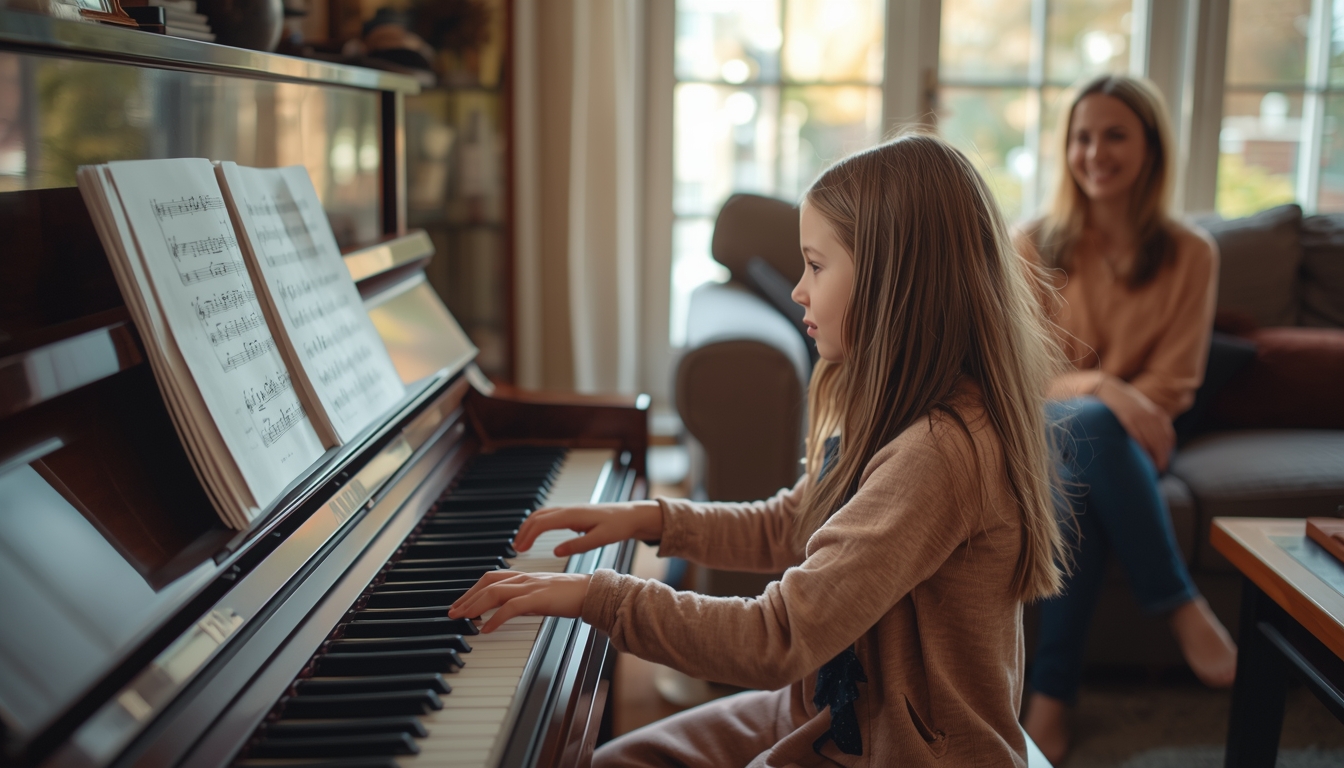
The most effective thing a parent can do to support their child’s music education is create a consistent, low-pressure practice environment at home — not by standing over the lesson, but by making music a normal, expected part of daily life.
Why Home Environment Matters More Than You Think
Your child’s music teacher handles instruction. What happens between lessons is almost entirely up to you. Research on music education consistently shows that students who practice regularly — even just 15 to 20 minutes a day — progress significantly faster than those who only show up to their weekly lesson. The difference isn’t talent. It’s what’s happening at home.
You don’t need to be a musician yourself to create that environment. You just need a few straightforward habits in place.
Set a Practice Time and Protect It
Consistency matters more than duration. A child who practices for 15 minutes every day will improve faster than one who squeezes in an hour the night before their lesson. Pick a time that fits naturally into your family’s routine — right after school, before dinner, or after homework — and treat it as non-negotiable, the same way you treat homework or bedtime.
If your child resists at first, that’s normal. Don’t negotiate the whether, only the when. “Do you want to practice before or after dinner?” gives them a sense of control without making practice optional.
Set Up a Dedicated Practice Space
Your child is much more likely to practice consistently if their instrument is accessible and their practice space is set up and ready to go. If the guitar lives in a closet or the keyboard is buried under school bags, practice becomes a production before it even begins.
It doesn’t need to be elaborate — just a corner of a room where the instrument lives, with a music stand if needed and enough space to sit comfortably. Remove friction wherever you can.
Listen, but Don’t Hover
One of the most supportive things you can do is simply be present and engaged — without critiquing. Let your child play for you. Ask them what they’re working on. Show genuine interest in what they’re learning, even if it sounds imperfect.
What you want to avoid is turning practice into a performance review. Comments like “that didn’t sound right” or “your teacher said you need to work on that part” put pressure on practice time in a way that makes kids dread it. Save corrections for the teacher. Your job is to be the enthusiastic audience.
Stay in Touch With the Teacher
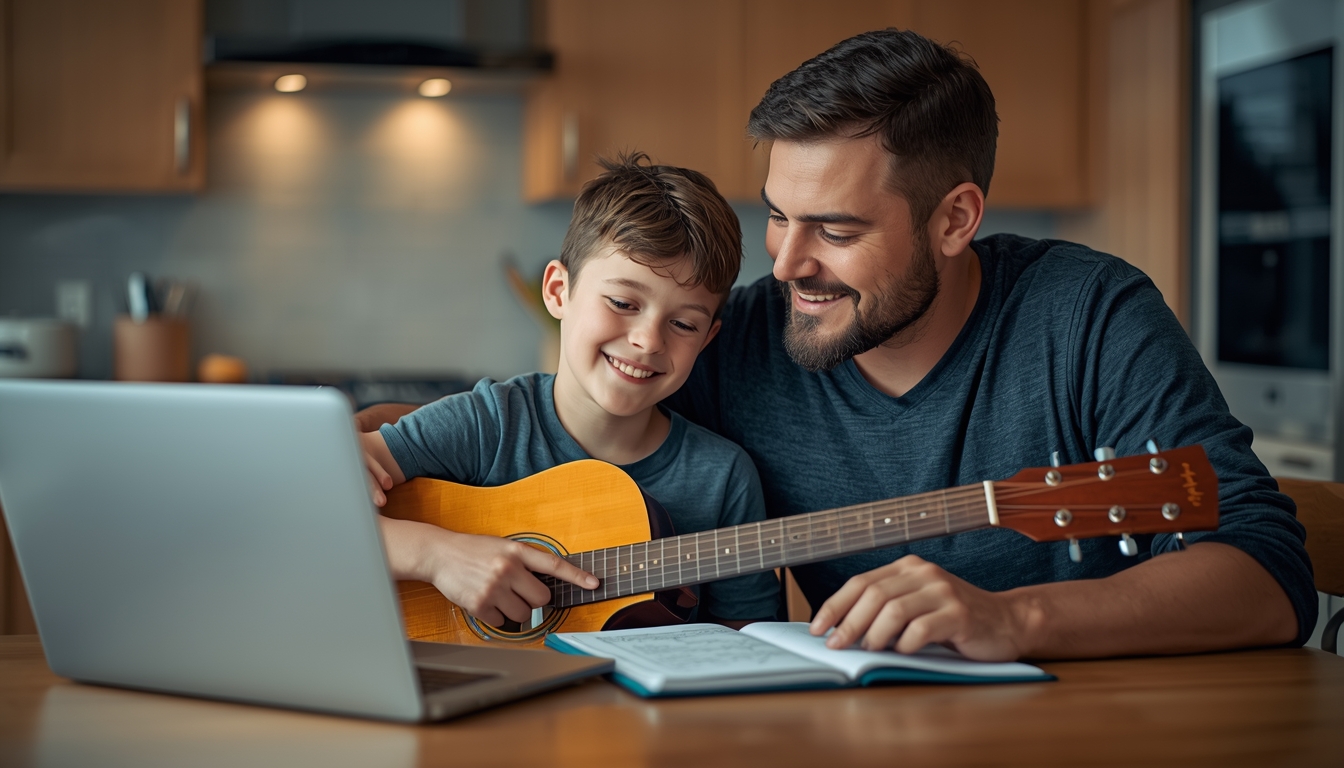
A quick note to your child’s teacher after a lesson — or at the start of a new one — goes a long way. If your child is excited about a particular song, mention it. If they struggled with something all week, let the teacher know. Teachers can adjust what they focus on in the lesson when they understand what’s happening at home, and your child benefits from that alignment.
Online lessons make this especially easy. Most teachers are reachable through the platform between sessions and genuinely appreciate brief updates from parents.
Looking for the right teacher for your child?
Tunelark connects families with experienced online music teachers for kids of all ages and skill levels — with flexible scheduling built for busy households.
Celebrate Progress, Not Perfection
Children learn music through repetition and gradual improvement — it’s not linear, and there will be weeks where nothing seems to click. How you respond during those stretches has a real impact on whether your child stays motivated.
Notice the small wins. “You remembered that tricky part at the end” is more useful than “you almost got through the whole thing.” Effort and persistence are worth acknowledging directly, separately from the quality of the playing.
If your child hits a wall and wants to quit, try to separate short-term frustration from a genuine change of interest. A brief break, a new song they’re excited about, or a conversation with their teacher about where they’re headed can shift the momentum.
Don’t Overschedule Around Lessons
Online music lessons work best when your child isn’t rushing in from soccer practice or mentally checked out because they have three other things happening that day. When you’re setting up your child’s weekly schedule, try to give their lesson a slot where they have a little breathing room on either side — time to settle in beforehand, and time to decompress or play freely afterward.
This is one of the underrated advantages of online lessons: you have full control over when the lesson happens. Use that flexibility intentionally.
Keep the Long View
Most kids go through phases of loving music, tolerating it, and occasionally wanting nothing to do with it. That’s completely normal. The families who look back and say their child “stuck with it” are almost always the ones who treated lessons as a normal part of life — not a high-stakes pursuit — and kept the environment at home positive and low-pressure.
The skills your child builds through music — discipline, pattern recognition, coordination, creative expression, the ability to sit with something difficult and keep working — extend far beyond whatever instrument they happen to be learning. That’s the long game worth playing.
Frequently Asked Questions
How long should my child practice each day?
For beginners, 10 to 20 minutes of focused practice daily is more effective than longer sessions a few times a week. As they advance, 20 to 30 minutes becomes more appropriate. The key is consistency — daily short sessions beat infrequent long ones at every level.
Should I sit in on my child’s online music lessons?
For young children (roughly under 8), it’s often helpful for a parent to be present — both to help with setup and to pick up on what to reinforce at home. For older kids, most teachers prefer working one-on-one. Check with your child’s teacher about what works best for their age and learning style.
What if my child refuses to practice?
Resistance is normal, especially in the first few months. Keep practice non-negotiable but keep it short. Giving your child control over when they practice (not whether) helps. If resistance persists for several weeks, talk to the teacher — they may be able to adjust the repertoire or approach to re-engage your child’s interest.
At what age should kids start music lessons?
Most children are ready for structured music lessons between ages 5 and 7, though this varies by instrument and by child. Voice and piano tend to work well at younger ages. Some instruments, like violin, can begin even earlier with the right teaching approach. A teacher consultation can help you determine readiness.
How do I know if my child’s teacher is a good fit?
Watch for whether your child looks forward to lessons or dreads them. A good fit means the teacher communicates clearly with your child at their level, gives structured feedback without discouraging them, and adjusts when something isn’t working. If your child consistently says they’re bored or frustrated, it’s worth having a conversation with the teacher or exploring other options.
Can online music lessons really work for kids?
Yes — online lessons have proven highly effective for children when set up well. The keys are a stable internet connection, a properly placed camera so the teacher can see hands and posture, and a distraction-free practice space. Many families find that the flexibility of online scheduling actually makes it easier to keep lessons consistent long-term.
Who we are
Tunelark provides virtual 1-on-1 music lessons to learners
of all ages.
We remove the barrier of geography and connect learners and teachers — wherever they are. Our growing community of vetted, experienced music educators have expertise in a wide variety of instruments, genres, and skill levels. We are passionate about connecting each student with the perfect instructor.

