
Building a Music Practice Routine That Actually Works
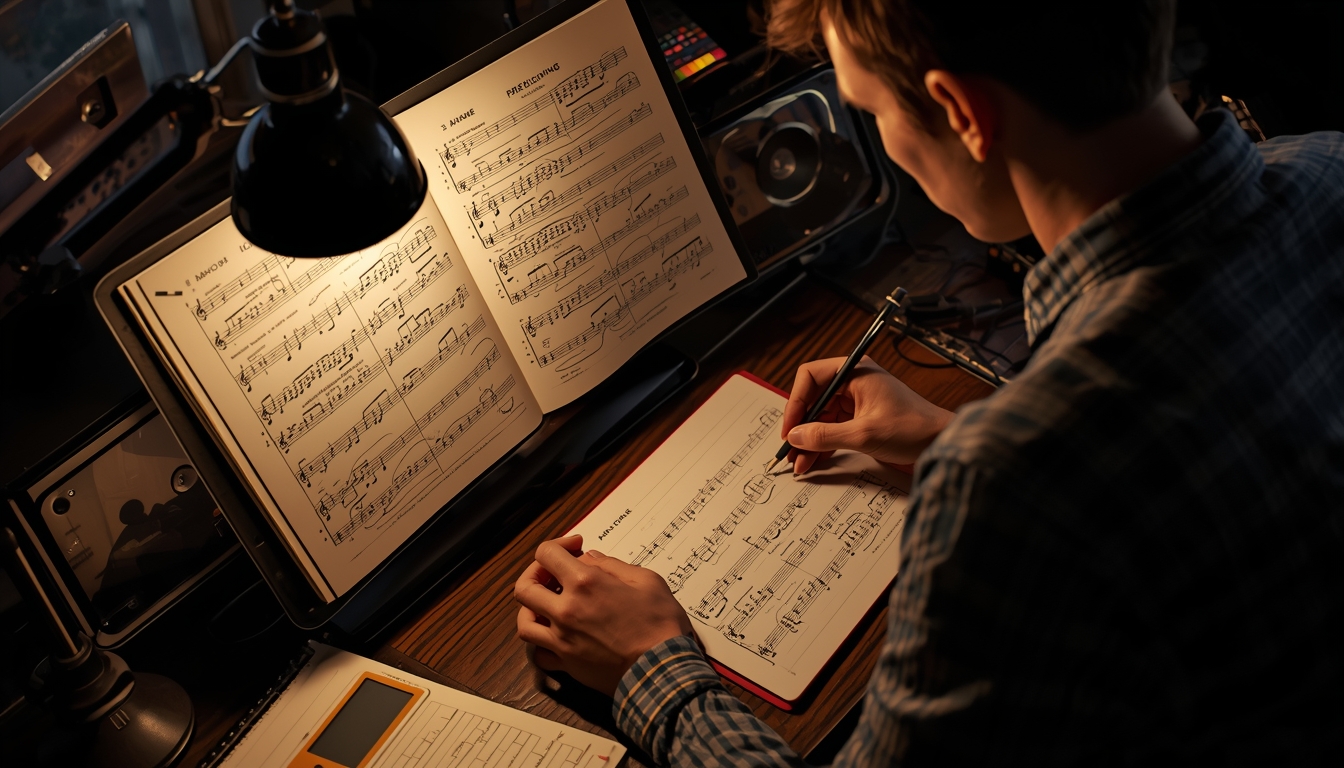
Most musicians know they should practice more consistently. Fewer know what to actually do during practice to make it worthwhile. A good routine isn’t about logging time — it’s about structured, intentional sessions that compound into real progress. Here’s how to build one that works.
Why Routine Beats Willpower
Relying on motivation to practice is a losing strategy. Motivation is inconsistent — it peaks when you’re excited about a new piece and disappears when you hit a wall. Routine removes the decision entirely: you practice at the same time, in the same place, in the same way, every day.
The neurological basis for this matters: music learning is fundamentally about building motor memory and neural pathways. These are strengthened by repetition and frequency, not by intensity or inspiration. A routine that runs on habit — not motivation — is what produces long-term progress.
The Structure of a Good Practice Session
A well-structured session has four parts. Adjust the timing based on your available time and level:
1. Warm-Up (5-10 minutes)
Start with something easy: simple scales, open strings, finger stretches, or a passage you already know well. The goal isn’t to accomplish anything technically demanding — it’s to get your muscles warm, your brain focused, and your ear engaged. Launching into hard material cold is inefficient and increases the risk of tension.
2. Technical Work (10-15 minutes)
Scales, arpeggios, Hanon exercises, bow exercises, rudiments — whatever applies to your instrument. This is the “vegetables” of practice. Not exciting, but foundational. Technical work builds the raw physical capability that makes everything else possible.
Work at a tempo where you can execute cleanly. If mistakes appear, slow down. Clean repetition at a slower tempo is worth more than sloppy repetition at full speed.
3. Repertoire Work (15-30 minutes)
This is where most of your practice time goes. Work on the pieces and passages your teacher assigned. Don’t just play through from start to finish — that’s the most common and least effective practice strategy. Instead:
- Identify the hardest sections and work those first, when your focus is sharpest
- Isolate problem passages and work them in small chunks
- Use a metronome to catch timing inconsistencies
- Alternate between slow careful work and running through at tempo
4. Cool-Down / Free Playing (5-10 minutes)
End with something enjoyable — a song you love, improvisation, sight-reading something new, or reviewing a piece you’ve already mastered. This is the reward that makes practice feel less like work. It also reinforces a positive emotional association with playing, which is important for long-term consistency.

Find a Teacher Who Structures Your Practice
How to Identify and Fix Problem Spots
The most important practice skill is knowing how to isolate and fix mistakes. Most students skip this — they play through a piece, notice a mistake, and just start over from the beginning. This wastes enormous time.
Instead, use this sequence when you make a mistake:
- Stop immediately — don’t play through it
- Identify what went wrong exactly: wrong note? bad timing? wrong fingering?
- Isolate the problem: take just the measure or even just the beat where the mistake happened
- Play it slowly and correctly: start at a tempo where you can get it right every time
- Repeat it correctly 5-10 times: a single correct repetition doesn’t overwrite a mistake
- Gradually increase the tempo: only when it’s reliable at slow speed
- Return to context: play a few bars before and after to integrate the fix
This process feels slow in the moment. It’s the fastest path to actually fixing things.
Making Your Routine Stick: Practical Tips
Same time, same place
The single most effective habit-building strategy is anchoring your practice to a consistent time and location. Morning practice — before the day’s demands accumulate — tends to have the highest long-term consistency rate. But the best time is the one you’ll actually do.
Remove friction
Keep your instrument accessible and ready to play. An instrument in a case in a closet doesn’t get practiced. The three seconds it takes to get it out is enough friction to skip a session on a tired day.
Start small, build gradually
If you’re not currently practicing regularly, don’t start with a 45-minute routine. Start with 10 minutes. Build the habit first, then extend the duration. Consistency at 10 minutes compounds into more than inconsistency at 45.
Track it
A simple log — even just a note in your phone — of what you practiced and for how long creates accountability and makes progress visible. Looking back at three months of consistent entries is motivating in a way that vague intentions aren’t.
Use your teacher’s assignments
A good teacher gives you a clear practice assignment at the end of every lesson. This removes the mental overhead of figuring out what to work on. If you’re not getting specific assignments from your teacher, ask for them explicitly.
What to Do on Days You Can’t Practice
Life happens. On days when a full session isn’t possible, do something rather than nothing. Even 5-10 minutes on a single passage is worth doing. The consistency of daily engagement — even minimal — builds the habit and maintains the neural pathways you’re developing.
The mistake to avoid is treating a missed day as license to write off the whole week. Miss a day, get back on track the next day. Progress isn’t linear and no single session — or missed session — determines your trajectory.
Start Building Your Practice With a Great Teacher
Frequently Asked Questions
What should a music practice routine include?
A good routine includes a warm-up, technical exercises (scales, arpeggios, or rudiments), work on current repertoire or assigned pieces, and a cool-down or sight-reading segment. The exact mix depends on your instrument and goals.
How do I stay motivated to practice?
Set specific, measurable goals rather than vague ones. Track your progress. Play music you actually enjoy, not just exercises. Give yourself short-term wins. And tell your teacher honestly when you’re struggling to practice — they can help restructure your assignments.
How long should a practice session be?
15-30 minutes for beginners, 30-60 minutes for intermediate students. The goal is focused, intentional practice — not logging time. A great 20-minute session beats an unfocused 60-minute one every time.
Should I warm up before practicing music?
Yes. A 5-minute warm-up with simple scales, open strings, or gentle finger exercises prepares your muscles and gets your brain into practice mode. It also reduces the risk of tension or strain.
How do I break bad habits in my playing?
Identify the specific habit (tension in the shoulder, collapsing finger, rushing a particular rhythm), then practice the problem spot in isolation, very slowly, with full attention. Bad habits are usually about speed — playing the passage correctly at 60% tempo consistently is the fastest way to overwrite them.
Who we are
Tunelark provides virtual 1-on-1 music lessons to learners
of all ages.
We remove the barrier of geography and connect learners and teachers — wherever they are. Our growing community of vetted, experienced music educators have expertise in a wide variety of instruments, genres, and skill levels. We are passionate about connecting each student with the perfect instructor.

