
Do Online Music Lessons Really Work?
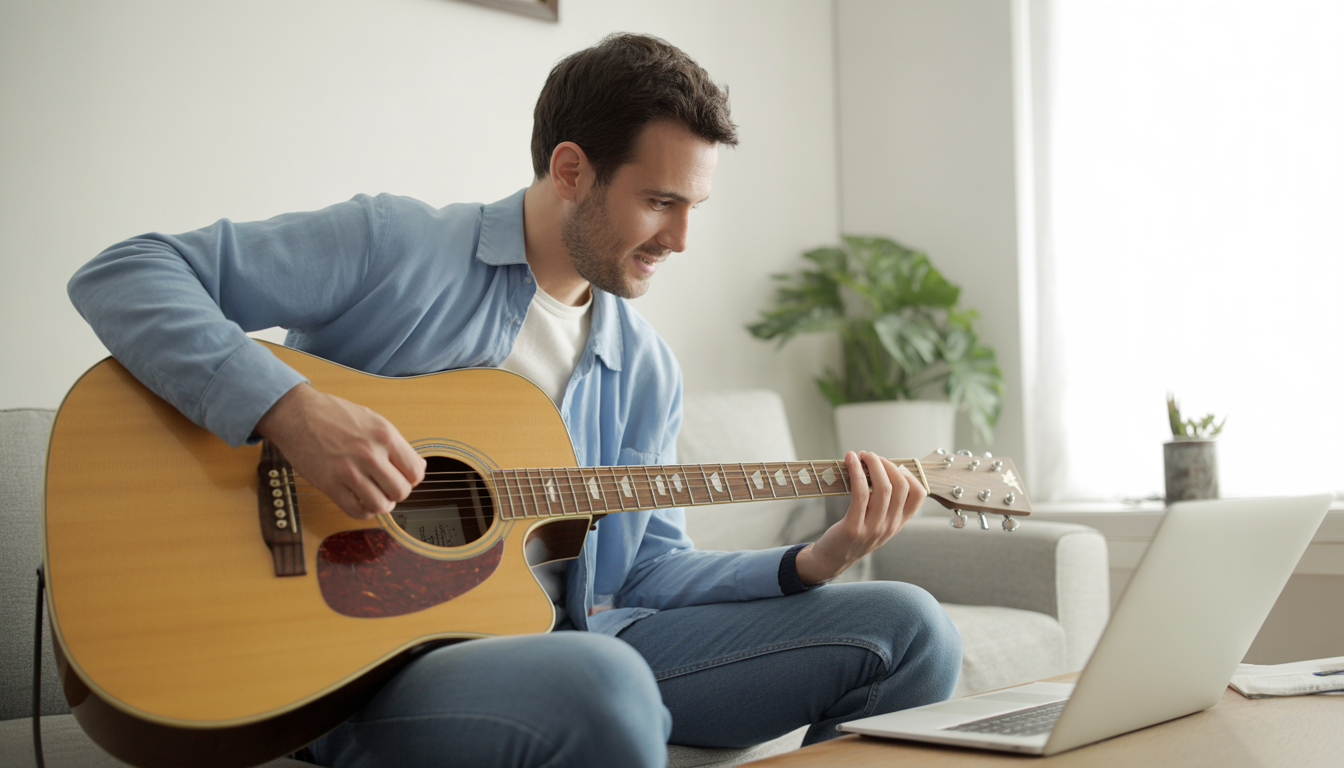
Yes — online music lessons work, and for most students, they work just as well as in-person instruction. The skepticism is understandable: music feels like something that should happen in the same room. But years of real-world evidence and research on remote learning have put that assumption to rest. What matters is the quality of the teacher, the consistency of practice, and how well the lesson experience is set up — not whether you’re in the same building.
What the Research Says
Studies on remote music instruction consistently find that student outcomes are comparable between online and in-person lessons when instruction quality is held constant. A 2020 study from the University of Melbourne found no significant difference in technical skill development between students learning piano in-person versus via video conferencing over a 12-week period.
The National Association for Music Education has documented that online instruction expanded access to qualified teachers for students in rural and underserved areas — often providing better instruction than was previously locally available.
The consistent finding: format matters far less than teacher quality and student practice habits.
Why Online Lessons Work (The Practical Reality)
Your teacher can see and hear everything that matters
The concern that teachers can’t evaluate technique over video underestimates how much of music instruction is visual and auditory — not tactile. For most instruments, a teacher needs to see your posture, hand position, embouchure, or bow hold. All of that is visible on camera. Your tone, intonation, rhythm, and expression are all fully audible.
There are edge cases — a teacher might occasionally want to physically adjust a student’s bow hold, for example — but experienced online teachers have developed verbal and visual cues that achieve the same correction.
Consistency is easier to maintain
One of the biggest predictors of musical progress is lesson consistency — showing up every week, reliably, over months and years. Online lessons remove the friction that causes students to cancel: bad weather, traffic, scheduling conflicts, and the simple exhaustion of adding another commute to a busy day.
Many students who struggled to maintain consistent in-person lessons found online lessons far easier to sustain. That consistency compounds over time.
You practice where you actually play
Online lessons happen in your practice environment. Your teacher hears your instrument in your room, can give specific feedback about your setup, and can evaluate how you actually sound on a daily basis — not how you sound in a different acoustic environment.

What Can Make Online Lessons Less Effective
Online lessons aren’t automatically effective. A few things can get in the way:
Poor audio/video quality
A laggy connection, bad microphone, or poor lighting degrades the lesson experience significantly. The good news: the bar isn’t high. A stable broadband connection, a laptop with a built-in webcam, and a reasonably quiet room are sufficient. See our guide on setting up for online lessons for specifics.
Not having an instrument that’s in good working condition
An out-of-tune instrument, a broken key, or a bow that needs rehairing makes lessons harder regardless of format. Before starting, make sure your instrument is in playable condition.
Inexperienced online teachers
Teaching online requires different skills than teaching in person. The best online teachers have adapted their pedagogy — they know how to demonstrate clearly on camera, how to give verbal corrections that replace physical ones, and how to structure lessons for the online format. When choosing a teacher, look for someone with real online teaching experience.
Which Instruments Work Best Online?
Almost all instruments are well-suited for online lessons. Here’s a quick breakdown:
- Piano and keyboard: Excellent for online learning. The teacher can clearly see both hands and the keyboard. Online piano lessons are among the most common.
- Guitar and bass: Works very well. Fingering hand, strumming hand, and tone are all easy to evaluate. Online guitar lessons and online bass guitar lessons are widely available.
- Voice: Excellent. Singing is almost entirely auditory — your teacher can evaluate tone, pitch, breath support, and expression fully over audio. Online voice lessons are highly effective.
- Strings (violin, viola, cello): Works well. Bow technique, left-hand position, and tone are visible on camera. Online violin lessons and online viola lessons are standard.
- Wind instruments (flute, clarinet, saxophone): Works well. Embouchure, hand position, and tone are all evaluable remotely. Online flute, clarinet, and saxophone lessons all translate well to video.
- Drums and percussion: Works well with the right camera setup. Stick technique, rudiments, and groove are easily evaluated. Online drum lessons are increasingly common.
- Ukulele: One of the best instruments for online learning — small, easy to position, and visually clear. Online ukulele lessons work great.
The Bottom Line
Online music lessons work. They’ve been working for serious students at every level — from beginners to pre-conservatory students to professional musicians working with remote coaches. The evidence is consistent, and the practical experience of thousands of students confirms it.
The factors that determine your progress are the same as they’ve always been: a skilled, experienced teacher, consistent weekly lessons, and daily practice between sessions. Online delivery changes none of that.
Browse Teachers and Book a Trial Lesson
Frequently Asked Questions
Do online music lessons work for beginners?
Yes. Beginners are well-suited for online lessons — technique is visible on camera, and the consistency of weekly online lessons often outperforms sporadic in-person ones. Many students have started from zero and progressed through years of lessons entirely online.
What instruments work best for online lessons?
Piano, guitar, voice, violin, and most melody instruments work very well online. Drums require a camera setup that shows both hands and feet, but are entirely learnable online. Ensemble instruments like trumpet and saxophone work fine for solo technique, though ensemble playing needs to happen separately.
Are online music lessons cheaper than in-person?
Often, yes — teachers save on studio rental and travel, and many pass that saving on. But price varies by teacher and platform. The more important question is value: a highly effective online teacher at a moderate rate beats a mediocre in-person one at any price.
What equipment do I need for online music lessons?
A device with a camera and microphone (laptop, tablet, or phone), a stable internet connection, and your instrument. A basic ring light or good natural lighting helps your teacher see your technique clearly.
Can I learn music faster with online lessons?
The research on this is consistent: the quality of instruction and consistency of practice matter far more than the lesson format. A great online teacher with a well-structured curriculum will outperform a mediocre in-person teacher every time.
Who we are
Tunelark provides virtual 1-on-1 music lessons to learners
of all ages.
We remove the barrier of geography and connect learners and teachers — wherever they are. Our growing community of vetted, experienced music educators have expertise in a wide variety of instruments, genres, and skill levels. We are passionate about connecting each student with the perfect instructor.

