
What to Expect in Your First Online Music Lesson
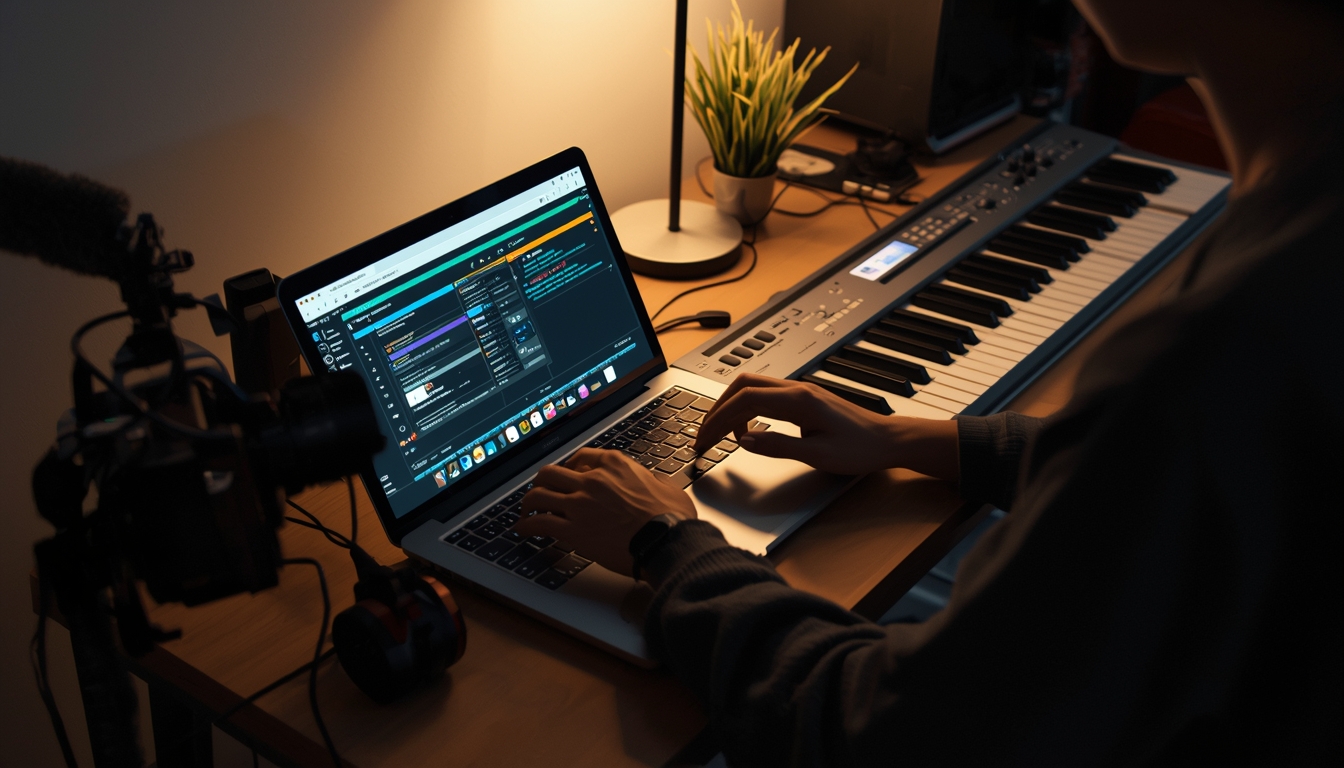
Your first online music lesson will probably feel a little different than you expect. That’s normal. Here’s a clear picture of what actually happens — before, during, and after — so you can walk in prepared and get the most out of it.
Before the Lesson: Getting Set Up
Test your tech in advance
Don’t wait until five minutes before your lesson to figure out your audio and video. Do a test run the day before: open the video platform your teacher uses (Zoom, Google Meet, FaceTime, or the platform’s built-in tool), make sure your camera shows your instrument clearly, and confirm your microphone picks up your playing.
Aim to position your camera so your teacher can see both your hands and, if relevant, your face or embouchure. For piano and guitar, a side angle often works well. For voice, a straight-on view is fine.
Tune your instrument
This sounds obvious, but many students forget. Arriving at a lesson with an out-of-tune instrument wastes time and makes it harder for your teacher to evaluate your playing. Use a tuner app or clip-on tuner before you start.
Find a quiet space
Background noise makes lessons significantly harder for both you and your teacher. Close doors, ask others in your home for quiet time, and turn off notifications. A quiet 45 minutes is one of the simplest ways to improve lesson quality.
Have a pencil and notebook
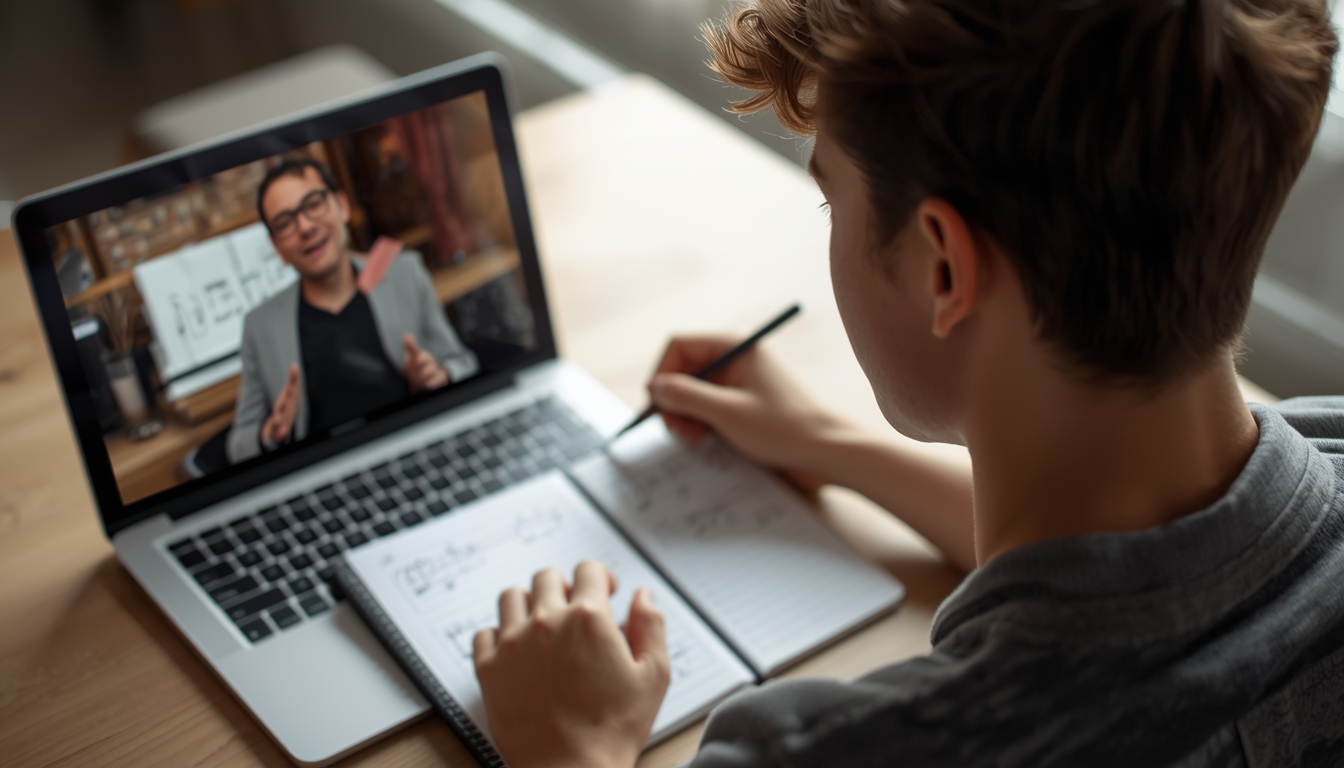
You’ll want to write things down. Your teacher will give you practice instructions, technique notes, and possibly music or exercises. Having something to write with means you won’t be trying to remember it all.
During the Lesson: What Actually Happens
The first few minutes are orientation
A good teacher will spend the opening few minutes getting to know you. Expect questions about your goals, your experience level, what music you like, and how much time you can practice. This isn’t small talk — it’s how a teacher builds a plan that actually fits you.
Be honest. If you’ve tried to learn before and stopped, say so. If you only have 10 minutes a day to practice, say that. The more accurate the picture you give your teacher, the better they can structure your lessons.
Some teaching happens in the first lesson
Most teachers don’t wait for lesson two to start teaching. Even in a first lesson, you’ll likely learn something — a technique concept, a first piece, a scale, or a fundamental principle. Come ready to play, not just talk.
Expect feedback that’s specific
A good teacher doesn’t just say “that was great” or “try it again.” They say things like “your third finger is collapsing on the A string” or “you’re rushing the dotted rhythm in bar three.” Specific feedback can feel blunt if you’re not used to it. Treat it as information, not criticism. It’s the whole point of having a teacher.
Ask questions
If you don’t understand an explanation, ask for it another way. If a technique feels impossible, tell your teacher. The lesson is for you — your teacher wants to know what’s working and what isn’t.
After the Lesson: The Practice Assignment
You should leave with a clear practice plan
At the end of every lesson, a good teacher gives you a specific practice assignment: what to work on, how to practice it, and how much time to spend on it. If you didn’t get this, ask before you log off: “What should I focus on this week?”
Practice before the next lesson matters more than anything else
The lesson is where you learn things. Practice is where they become part of you. Students who practice consistently between sessions progress two to three times faster than those who only play during lessons. Even 15 minutes a day of focused practice makes a real difference. See our guide on how much to practice for specific recommendations.
It’s okay if the first lesson felt awkward
First lessons have a natural adjustment period. You’re getting used to each other. Your teacher is gathering information about how you learn. The dynamic in lesson three will feel different than lesson one. Give it a few sessions before deciding whether the teacher is the right fit.
What Makes a First Lesson Go Well
- You showed up on time with your instrument ready
- Your teacher asked about your goals and listened to your answers
- You left knowing specifically what to practice
- You felt comfortable asking questions and making mistakes
- Your teacher gave you at least one concrete, specific piece of feedback
What to Do If It Doesn’t Click
Not every first lesson is a hit, and not every teacher is the right match. If after two or three lessons the fit still doesn’t feel right — the communication style isn’t working, the teaching approach doesn’t fit how you learn, or you just don’t look forward to lessons — it’s completely fine to try a different teacher. Most platforms, including Tunelark, make this easy.
A good teacher fit makes every subsequent lesson better. It’s worth finding.
Frequently Asked Questions
What should I do before my first online music lesson?
Test your audio and video setup, tune your instrument, find a quiet space with good lighting, and have a pencil and notebook nearby. If the platform sent you a link or instructions, read them in advance.
How long are online music lessons?
Lessons are typically 30, 45, or 60 minutes. 30-minute lessons are common for young beginners. 45 and 60 minutes are standard for older students and adults. Your teacher will have a recommendation based on your age and experience.
What if the first lesson doesn’t go well?
One awkward lesson doesn’t mean the teacher is wrong for you — first lessons have an adjustment period on both sides. Give it 2-3 lessons before deciding. If after a few lessons the fit still isn’t right, it’s completely fine to try a different teacher.
Do I need to prepare anything for my first lesson?
Mainly just your instrument in working condition, a quiet space, and your goals. If you have specific songs you want to learn or music you’ve tried before, mentioning that in the first lesson helps your teacher understand where you’re coming from.
Who we are
Tunelark provides virtual 1-on-1 music lessons to learners
of all ages.
We remove the barrier of geography and connect learners and teachers — wherever they are. Our growing community of vetted, experienced music educators have expertise in a wide variety of instruments, genres, and skill levels. We are passionate about connecting each student with the perfect instructor.

